What Are the Three Types of Loaders
In construction and earthmoving operations, choosing the right loader can directly impact project progress and operating costs. Industry data shows that choosing the right type of heavy equipment can reduce a contractor’s overall fuel consumption and maintenance costs by an average of 15% to 20%. So, what are the three main types of loaders? And how can we quickly and accurately select the right model for our daily construction projects?
This article will provide an in-depth breakdown of the key differences between wheel loaders, track loaders, and skid-steer loaders, helping you find the most cost-effective and efficient workhorse for your project.
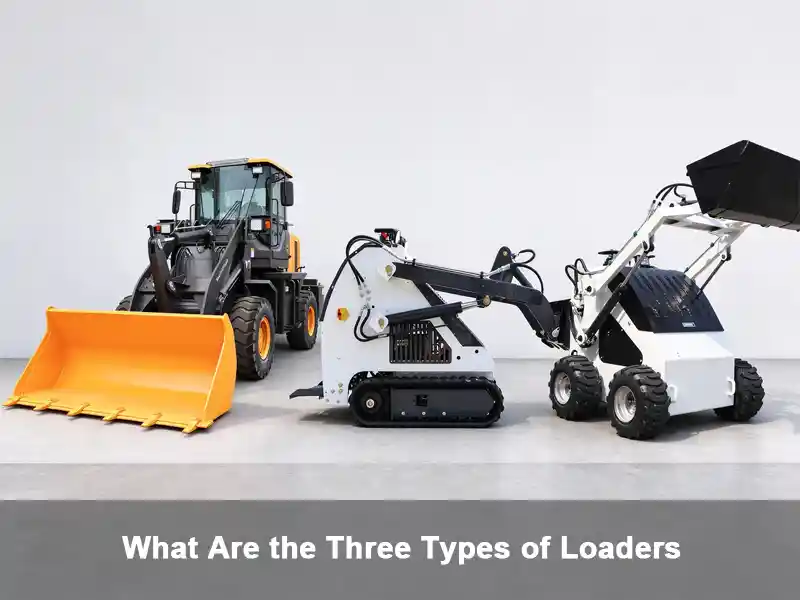
Table of Contents
What Is a Loader?
A loader is a wheeled construction machine widely used in engineering projects for earthmoving; it is primarily used for loading and transporting bulk materials and can also assist in light excavation work.
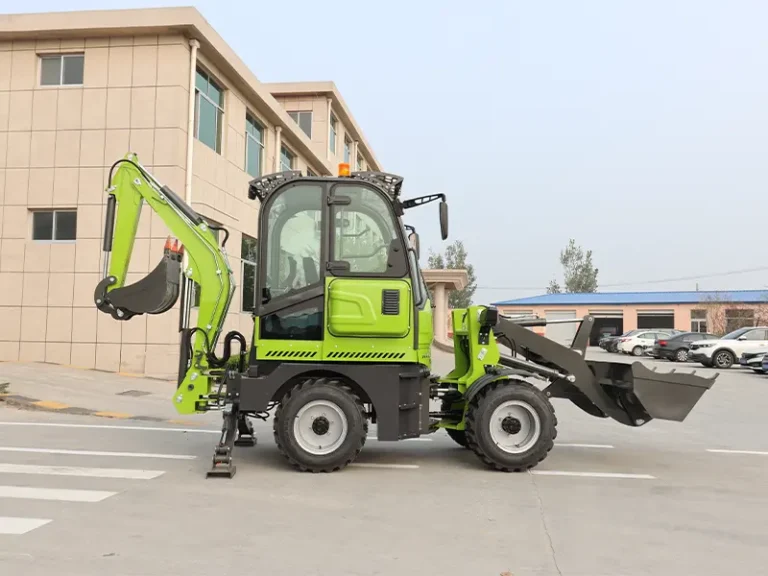
A loader is a wheeled earthmoving machine used in construction projects, primarily for shoveling and transporting bulk materials, and can also assist with light excavation work. In actual construction projects, terrain conditions, workspace, and load requirements vary, which necessitates equipment with a tailored physical design.
Technical Features
Most mainstream wheeled loaders currently employ a hydrodynamic transmission system, offering flexible operation and excellent chassis mobility. Compared to tracked equipment, they demonstrate superior road-travel capability, allowing for rapid relocation between different work zones without the need for additional trailer transport. In recent years, new-energy electric loaders have also begun to see commercial adoption; they are increasingly being deployed in fixed operational environments—such as ports and industrial facilities—where their low energy consumption and zero-emission profile offer significant advantages.


Choosing the wrong type of loader can not only lead to frequent equipment breakdowns and increased wear on tracks or tires but may also cause project delays due to low operational efficiency. Understanding the different loader types enables you to make the most informed business decisions when purchasing or renting equipment. Over the past 15 years, our team has served more than 500 construction projects and has found that precisely matching the machine model to the task is the critical first step in reducing overall project costs.
1. Types of Loaders: Wheel Loaders
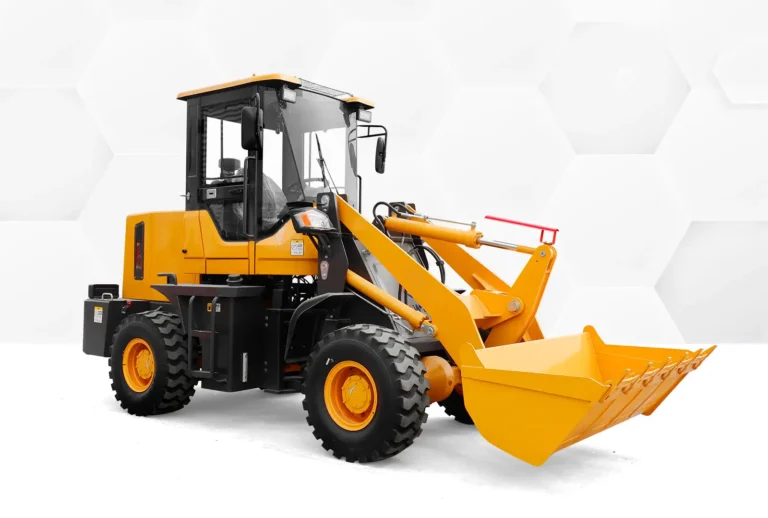
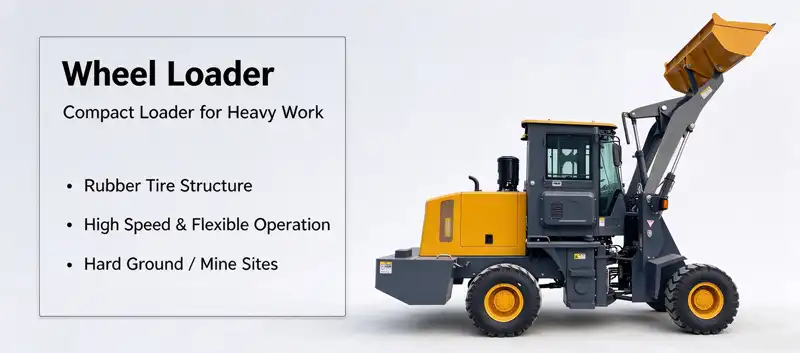
Wheel loaders are currently the most widely used and numerous type of construction machinery in the global market. Featuring a pneumatic-tired undercarriage and an articulated frame, they offer exceptional maneuverability and high travel speeds. On construction sites with well-paved roads or hardened surfaces, wheel loaders can transport materials rapidly, reaching speeds of up to 40 km/h.
Advantages and Technical Features:
- High-Speed Relocation: The machine can move independently between adjacent job sites without the need for a tow truck, significantly reducing transportation costs.
- Cost-Effective Operation: With a simple structure and low maintenance requirements, the machine’s fuel consumption is lower than that of comparable tracked equipment. Tire costs account for only 40% to 60% of the machine’s operating costs—far lower than the cost of track plate wear for tracked equipment.
- Ground Protection: Rubber tires cause minimal damage to paved concrete or asphalt surfaces.
Applications
- Loading and handling of large volumes of materials at sand and gravel yards and concrete batching plants.
- Transshipment of bulk cargo at open-pit mines and port terminals.
- Municipal road construction and large-scale earthwork filling projects.
If you’re looking for a highly efficient, high-capacity loader that needs to be moved frequently, our full line of wheel loaders—with rated capacities ranging from 3 metric tons to 9 metric tons—is the perfect fit for your mining and construction needs.
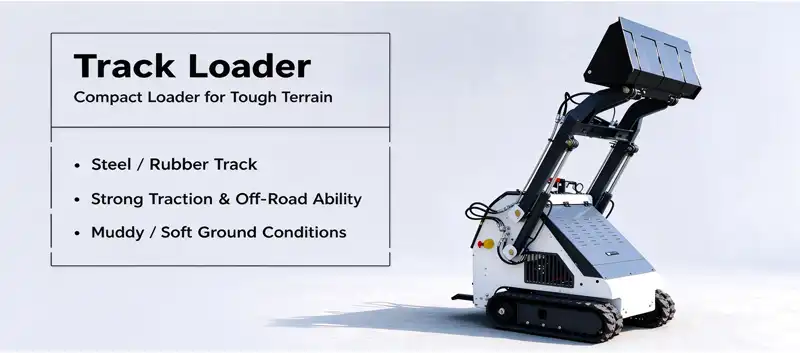
2. Types of Loaders: Track Loaders
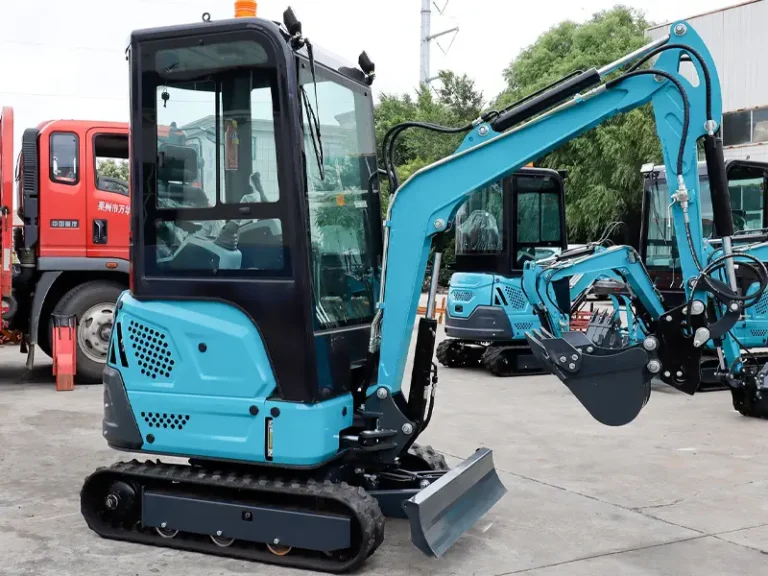
Track loaders (also known as crawler loaders) feature a tracked undercarriage and are specifically designed for challenging terrain. They combine the powerful traction of a bulldozer with the high lifting capacity of a conventional loader. The large contact area of the tracks effectively distributes the machine’s weight, reducing ground pressure to approximately 35% of that exerted by typical wheeled equipment.
Advantages and Technical Features:
- Superior Traction and Stability: It won’t get stuck or slip on soft sand, deep mud, or steep slopes, ensuring excellent operational stability.
- High Digging Force: The reinforced track undercarriage can withstand greater reaction forces, making it suitable for hard excavation and heavy-duty loading and unloading.
- High Durability: It eliminates the risk of tires being punctured by sharp rocks, making it ideal for work in gravel pits and site clearance operations.
Applications
- Cleaning and initial site grading on slippery, muddy construction sites during the rainy season.
- Forestry development, wilderness excavation, and complex mountainous earthwork operations.
- Building demolition sites containing large amounts of sharp gravel.
We offer a range of track loaders equipped with high-strength alloy tracks, ensuring consistent uptime even in the most demanding muddy or rocky operating conditions.
3. Types of Loaders: skid steer loaders
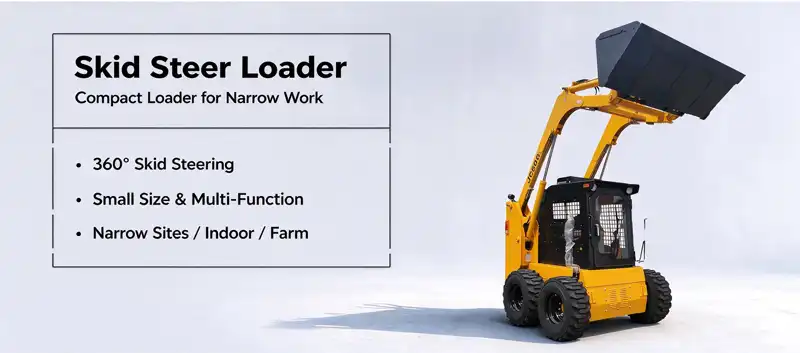
Skid-steer loaders, also known as multi-purpose skid-steer tracked or wheeled loaders, are compact, highly maneuverable pieces of mini-construction equipment. They rely on the speed difference between the wheels or tracks on either side—or even their rotation in opposite directions—to achieve 360-degree zero-radius turning. This unique steering mechanism allows them to operate freely in extremely confined spaces.
Advantages and Technical Features:
- Exceptional spatial adaptability: With a width typically ranging from only 1.2 to 1.8 meters, the machine can drive directly into indoor spaces or basements to perform work.
- “Multi-functional” quick-change system: Equipped with a standard hydraulic quick-coupler, it allows for the swapping of dozens of different attachments—such as sweepers, hydraulic breakers, trenchers, or augers—in under two minutes.
- Ease of operation: Featuring a dual-lever control system with highly responsive inputs, it significantly lowers the learning curve for operators.
Applications
- Urban road repair, landscaping, and interior demolition and renovation.
- Feed handling and manure removal in agriculture, forestry, and livestock farming.
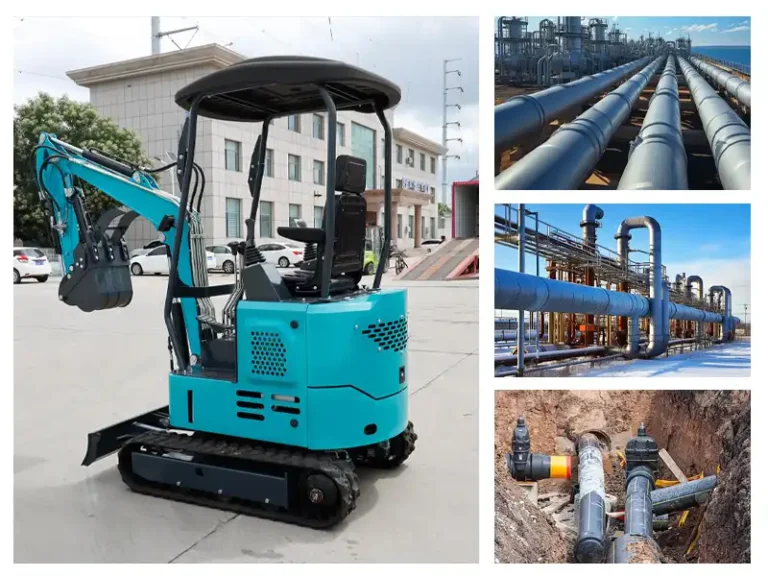
- Snow clearing, trenching for pipelines, and small-scale earthwork grading.
If your job site has limited space, or if you need a single machine capable of handling various tasks—such as sweeping, excavating, and drilling—our versatile skid steer loaders, paired with the appropriate attachments, offer the most cost-effective solution.
Comparison of Three Major Types of Loaders
| Comparison Item | Wheel Loader | Track Loader | Skid Steer Loader |
|---|---|---|---|
| Travel Speed | Very high (25 – 40 km/h) | Relatively low (8 – 12 km/h) | Moderate (10 – 18 km/h) |
| Terrain Adaptability | Suitable for flat/hardened ground | Excellent (muddy, wetland, steep slope) | Suitable for flat ground & narrow spaces |
| Maneuverability / Turning Radius | Good (articulated steering) | Moderate | Excellent (360° in-place turning) |
| Main Application | Fast loading & unloading of bulk materials | Excavation and heavy-duty work under harsh conditions | Multi-purpose auxiliary work & construction in tight spaces |
| Maintenance Cost | Moderate (tire maintenance) | High (track components) | Low overall, simple structure |
Selection Recommendations
Consider the site: If you’ll be moving materials on concrete surfaces or large, leveled areas, a wheel loader is the best choice.
Consider the terrain: If the job site is on undeveloped wilderness, swampland, or soft soil, a track loader is the best choice.
Consider space and operational flexibility: If you need to work in narrow aisles or frequently switch between different attachments, a skid steer loader is the best choice.
Email: xinhao@snowyowlmachine.com
TEL/WA: +86 19939724755
FAQs

conclusion
When selecting a loader, the most expensive or largest model is not necessarily the best choice; the key lies in how well a machine’s specific features align with your actual operating conditions. Whether it is a wheel loader designed for high efficiency, a track loader built for superior off-road capability, or a versatile skid steer loader, each type of equipment plays an indispensable role in its respective construction application.
If you are still unsure which loader is the best fit for your current project, or if you would like to obtain detailed product specifications and the latest pricing, please feel free to contact our team of professional heavy equipment consultants. We will help you select the most cost-effective solution tailored to your specific site conditions and budget!