Ultimate Guide to Safe and Efficient Mini Excavator Transportation
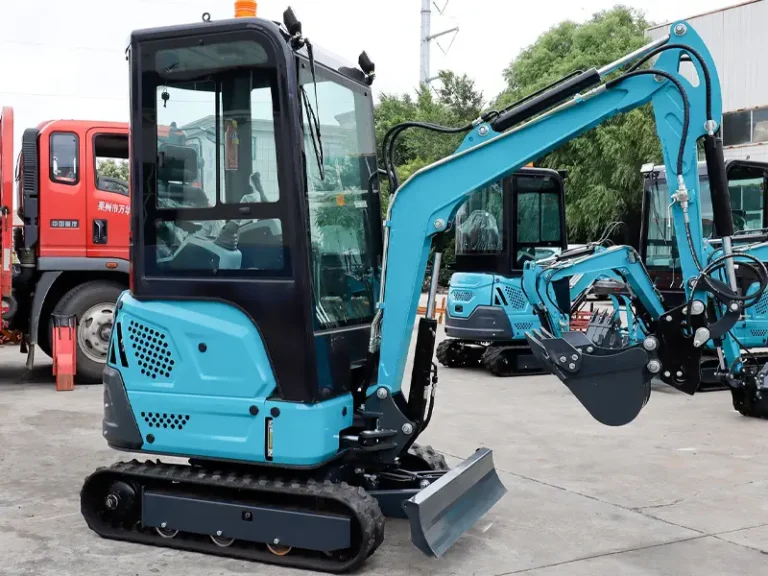
In construction, landscaping, and agricultural water conservancy projects, mini-excavators have become indispensable, core pieces of equipment on the job site, prized for their compact, agile design and high operational efficiency. However, many construction teams and individual owners often overlook critical safety details when transporting these machines. Mastering the essential guidelines for transporting a mini-excavator not only helps extend the equipment’s service life but also ensures safety on the road and helps avoid unnecessary traffic violations and penalties.
Table of Contents
Pre-Transportation Preparations and Specification Verification
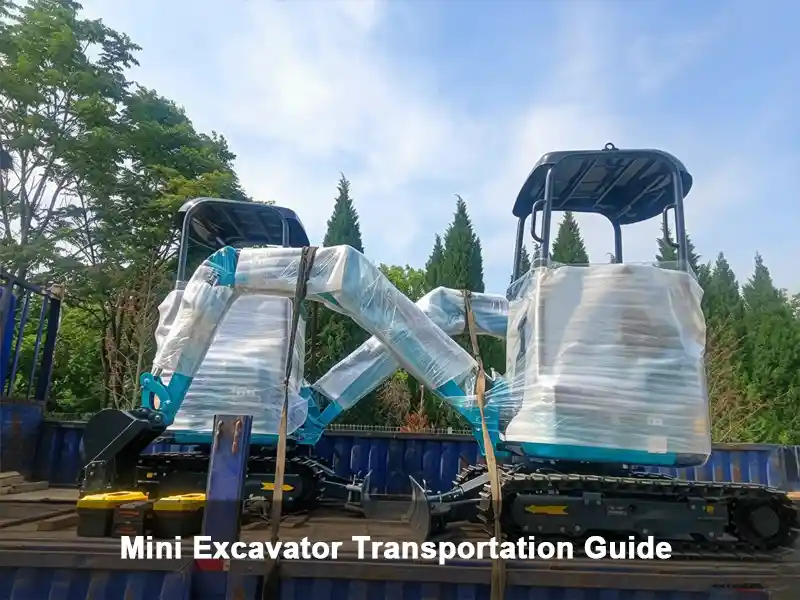
Before planning to transport a mini excavator, the most critical step is to accurately assess the equipment’s weight and the load-carrying capacity of the transport vehicle.
Operating Weight
The weight of a mini excavator typically ranges from 1 metric ton to 6 metric tons. It is important to note that, in addition to the machine’s unloaded weight, you must also account for the weight of any attached buckets, breakers, and a full fuel tank.
Trailer & Tow Vehicle
Towing Capacity: Confirm the towing vehicle’s (such as a heavy-duty pickup truck or truck) maximum towing capacity and Gross Vehicle Weight Rating (GVWR).
Trailer Specifications: Use a specialized equipment trailer or a dual-axle trailer. Check the trailer’s ramp load capacity, tire pressure, and ensure the braking system (such as an electromagnetic or hydraulic braking system) is functioning properly.
Standard Procedures for Loading and Unloading Mini Excavators
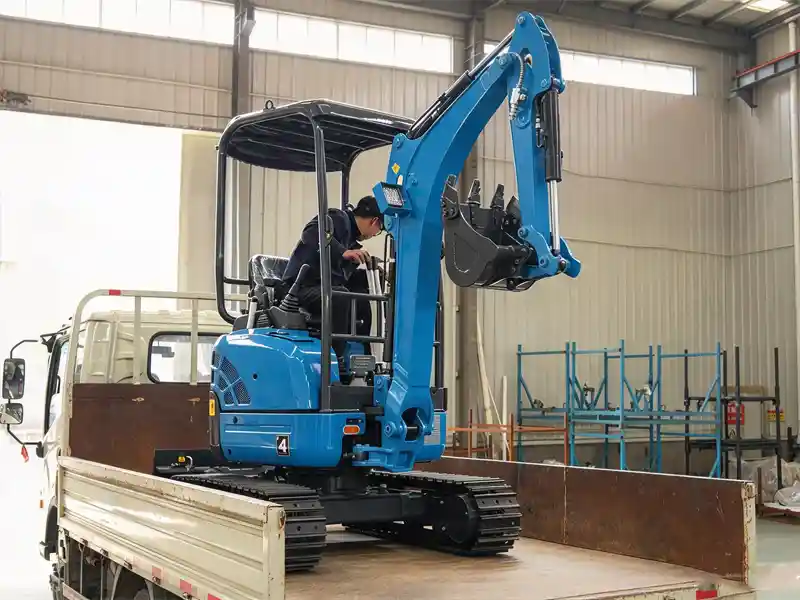
Loading and unloading are stages where accidents are likely to occur; following the standard procedures outlined in the “Mini Excavator Transportation Guide” can minimize the risk of overturning.
Selecting a Level Surface: Park the trailer on a flat, firm surface free of obstacles, apply the tow vehicle’s parking brake (hand brake), and place wheel chocks in front of and behind the trailer’s tires.
Adjusting the Ramp Angle: Ensure the ramp at the rear of the trailer is slip-resistant and free of mud or oil stains, and keep the angle within a safe range.
Slow and Steady Loading: Start the mini excavator, engage low-speed mode, and carefully drive it up the ramp with the heavier end (typically the track drive wheel or counterweight end) facing uphill.
Positioning and Center of Gravity Balance: Park the machine directly above the trailer’s centerline, maintaining front-to-rear weight balance (Tongue Weight should be kept between 10% and 15% of the total weight) to prevent the tow vehicle from lifting the front or swerving due to excessive weight.
Retract the work equipment: Lower the boom, arm, and bucket so they rest flush against the trailer floor, then turn off the engine and switch off the main power switch.
Best Practices for Binding and Securing (4-Point Lashing Method)
Use chains (such as Grade 70 transport chains) and chain binders that meet industrial safety standards. It is strictly prohibited to secure the main body of the machine using only ordinary nylon straps.
Implement the 4-Point Tie-Down Standard
- Set up fixed chain tie-down points on both the left and right sides of the front and rear of the mini excavator’s frame.
- Each chain should apply tension in opposite directions, with chains tightened in a crisscross pattern to ensure independent restraint in all four directions: front, rear, left, and right.
Securing Attachments and the Bucket
The bucket and boom must be individually secured to the trailer floor using chains or high-strength flat straps to prevent them from shifting due to vibrations during transport.
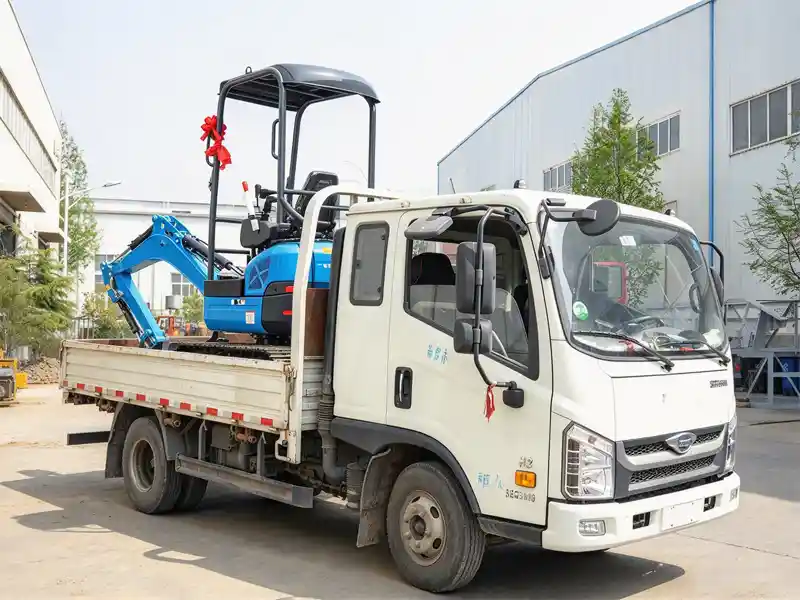
Precautions for Driving on Roads and Daily Inspection Checklist
Pre-Departure Check: After driving 5–10 kilometers, pull over in a safe area and check the securing chains for looseness, tire pressure, and any abnormalities at the tie-down points.
Drive Smoothly: Take wider turns, and maintain smooth turning and braking maneuvers to avoid sudden braking or sharp turns at high speeds, which can cause the trailer to skid.
Comply with Laws and Regulations: Ensure that the total height and width of the load comply with local traffic regulations; if the load exceeds standard dimensions, apply for an Oversize Permit in advance.
Following the guidelines in this mini-excavator-transportation-guide will not only improve operational efficiency but also ensure the safety of every construction transport operation.
Email: xinhao@snowyowlmachine.com
TEL/WA: +86 19939724755
FAQs


conclusion
The efficient transport of mini excavators relies on standardized and rigorous transportation procedures. From the initial precise calculation of the equipment’s weight and the towing vehicle’s load capacity, to maintaining a balanced center of gravity during loading and unloading, to strictly implementing the “4-point independent securing method” to fasten the machine body and attachments—every detail directly impacts operational safety and compliance with traffic regulations.
In practice, it is crucial to avoid relying solely on experience for visual estimates or simplifying the securing procedures. By consistently rechecking chain tension and tire condition before departure and strictly adhering to local traffic regulations, you can minimize equipment wear and transportation risks to the greatest extent possible, ensuring that construction projects proceed efficiently, safely, and smoothly.
Contact Us