Types of Telehandlers: Fixed, Rotating and Compact
In construction and agricultural operations, choosing the right lifting equipment is crucial for efficiency and safety. A telehandler is a versatile machine that combines the lifting capability of a forklift with the reach of a crane, allowing you to move and place heavy materials with precision.
At Xuexiao Machinery, we provide high-quality telehandlers that can lift up to 6,000 kg and reach heights of 20 meters, supporting a wide range of projects. In this article, we will explore the three main types of telehandlers—fixed, rotating, and compact—helping you understand which model best fits your workflow and job site needs.
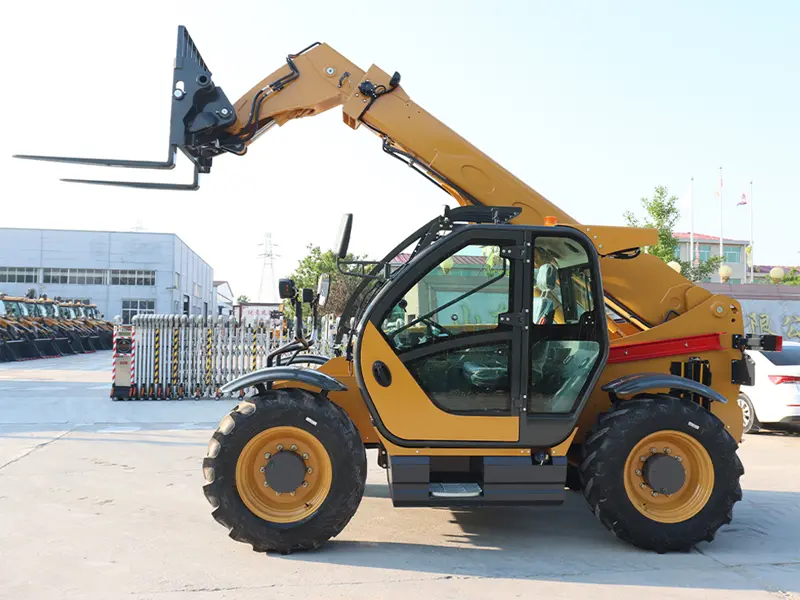
Table of Contents
What is a Telehandler?
A telehandler, also known as a telescopic handler, is a versatile piece of material handling equipment that combines the lifting capabilities of a forklift with the reach of a crane. It is widely used in construction, agriculture, and industrial projects. You can lift, move, and place heavy loads with precision. At Xuexiao Machinery, our telehandlers are engineered for safety and efficiency, supporting loads up to 6,000 kg and heights exceeding 20 meters. Understanding the telehandler’s basic components—boom, chassis, and attachment options—helps you choose the right model for your operations.
Types of Telehandlers
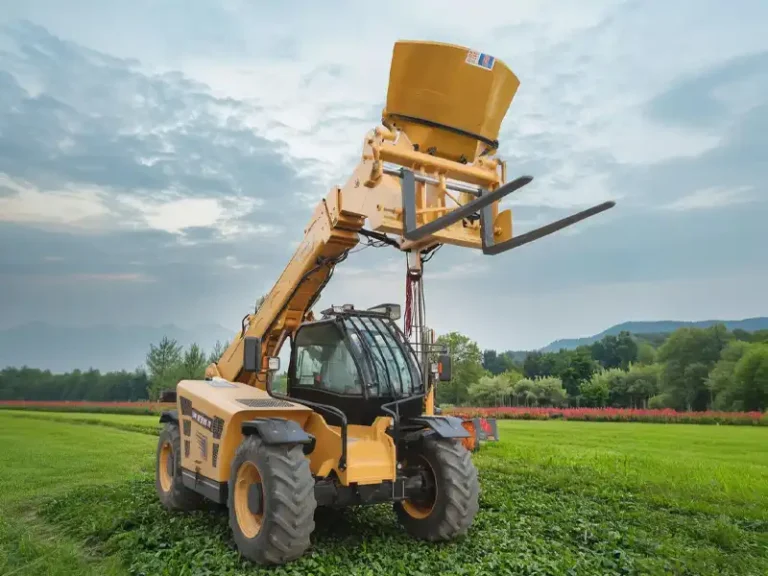
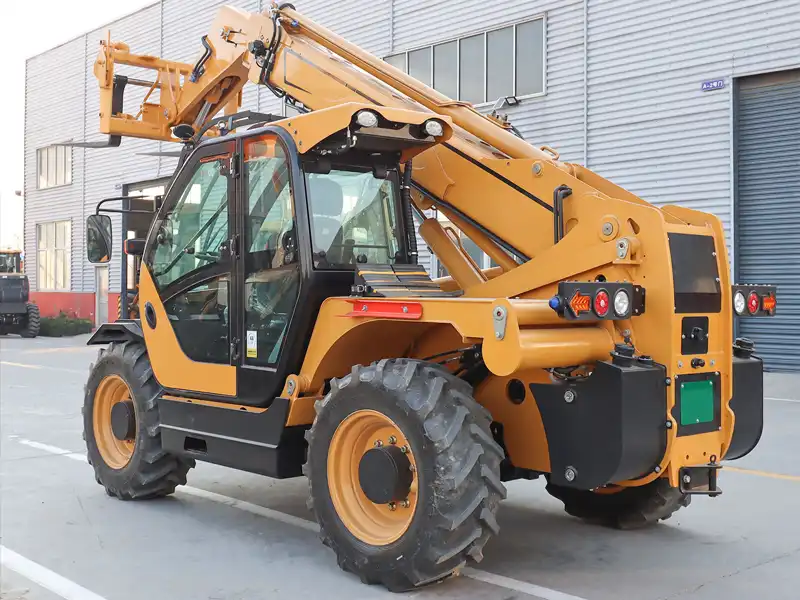
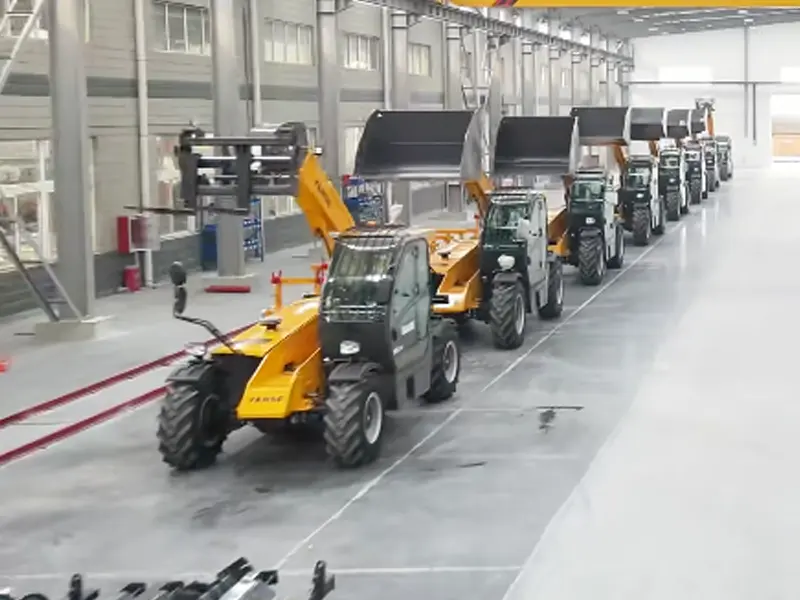
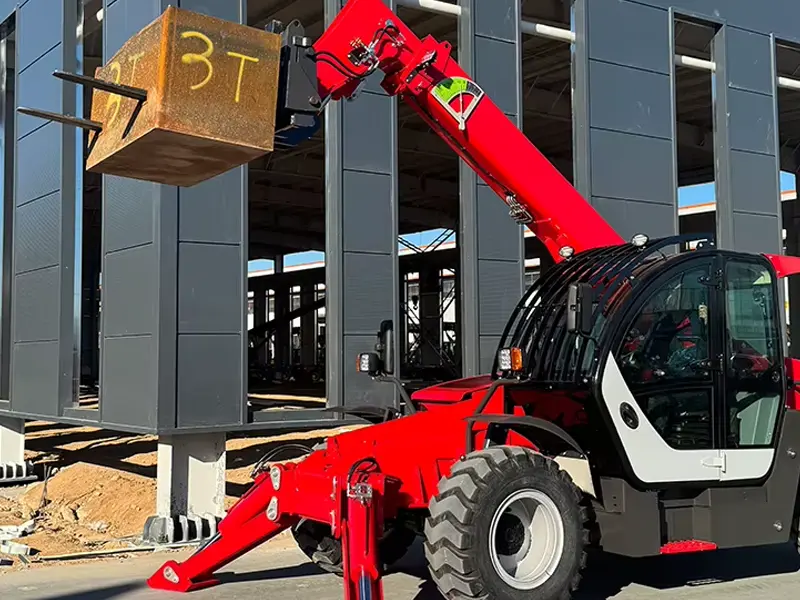
Fixed Telehandlers
Fixed telehandlers are the most common and cost-effective type. They feature a rigid chassis and boom that provide reliable lifting and transporting capabilities. You can easily use them on construction sites or warehouses to move pallets, equipment, or building materials. Our Xuexiao fixed telehandlers handle loads up to 4,000 kg and offer low maintenance needs, making them perfect for standard lifting tasks.
Key Characteristics: High lifting capacity and incredible forward reach.
Best For: Heavy-duty lifting on stable ground, moving pallets, and agricultural work (like stacking hay).
Why it’s popular: It’s the most cost-effective and straightforward to operate. It’s a “workhorse” rather than a “specialist.”
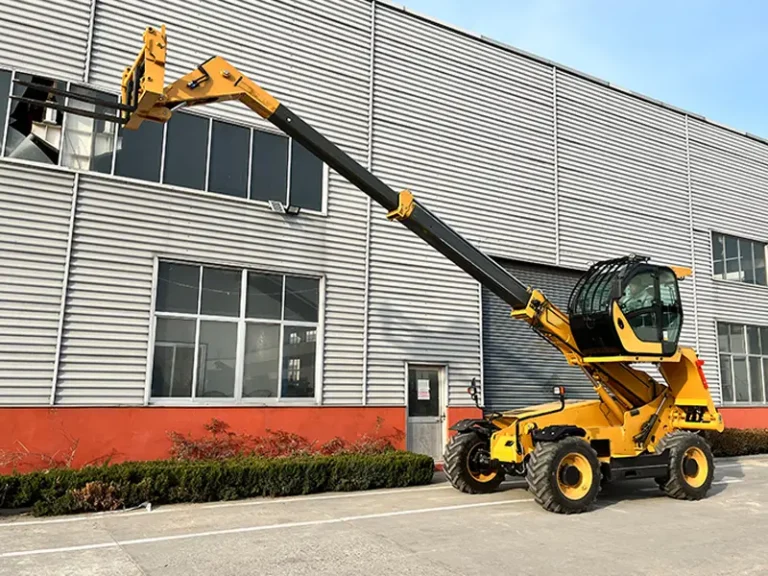
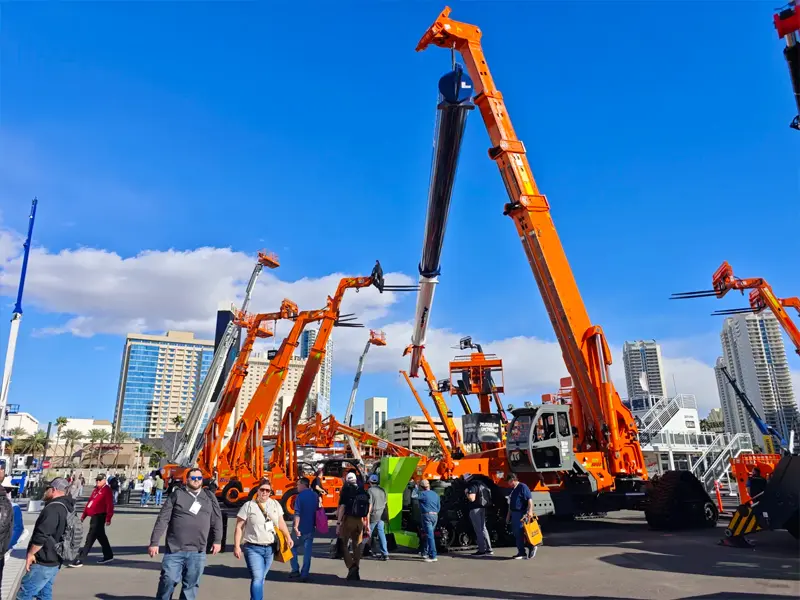
Rotating Telehandlers
Rotating telehandlers offer 360° boom rotation, giving you unparalleled flexibility in tight or complex work areas. If you often need to lift and place loads without repositioning the machine, rotating telehandlers are ideal. At Xuexiao Machinery, our rotating models can reach heights of over 18 meters while maintaining precise control, helping you increase efficiency and reduce site congestion.
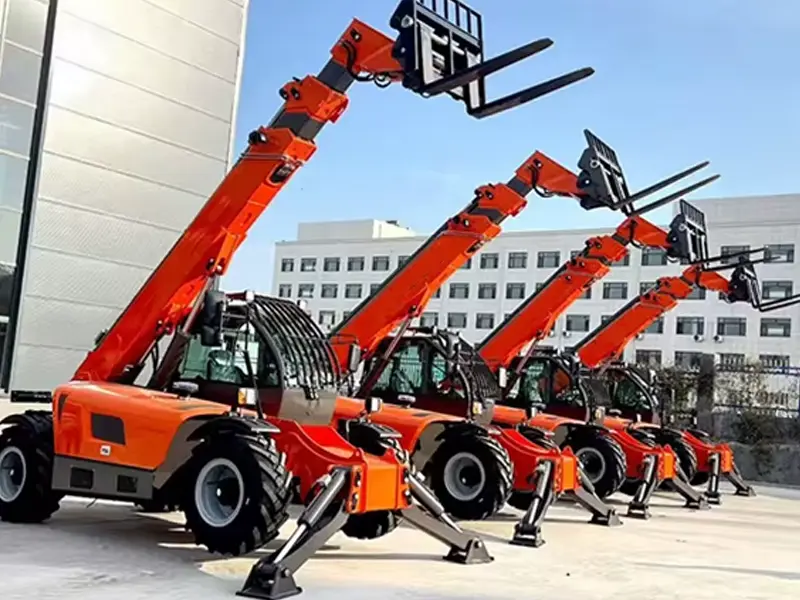
Key Characteristics: Often equipped with outriggers for stability. It essentially functions as a hybrid between a telehandler and a small crane.
Best For: Congested urban construction sites where there isn’t room to drive the machine around to position a load.
Why it’s popular: Massive time-saver. Instead of “drive-to-place,” you “rotate-to-place,” which significantly increases efficiency and safety in cramped spaces.
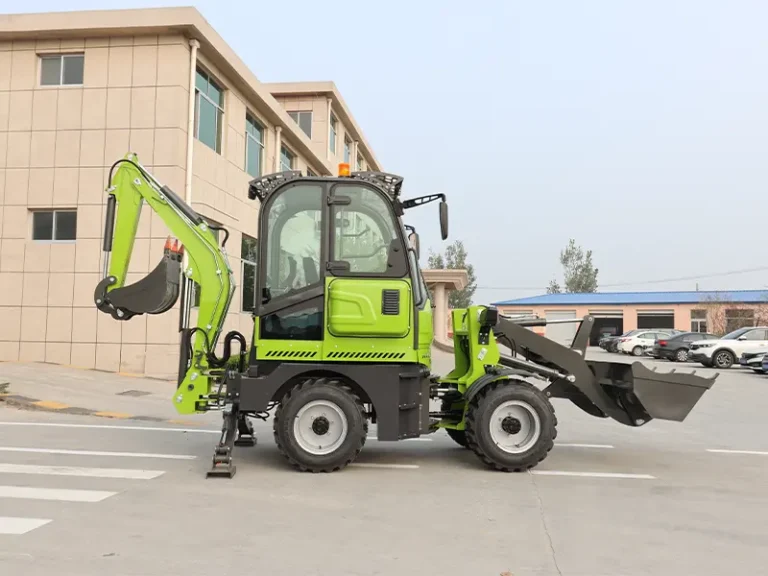
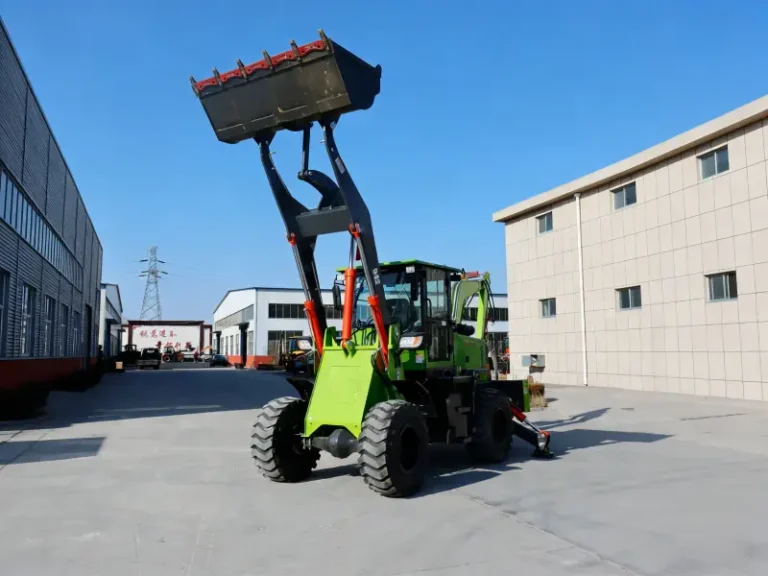
Compact Telehandlers
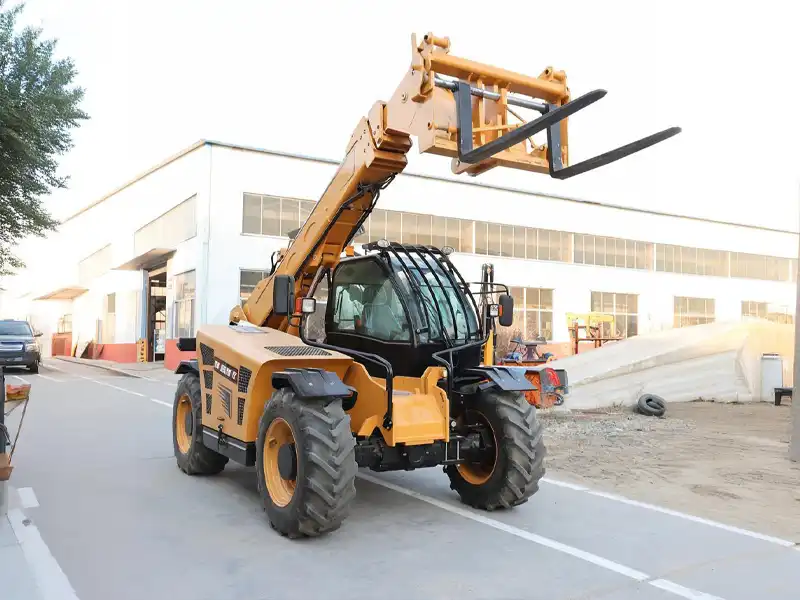
Compact telehandlers are smaller, more maneuverable machines designed for confined spaces, urban projects, or agricultural operations. They offer impressive lifting power despite their reduced footprint. With Xuexiao compact telehandlers, you can operate in narrow streets or barns without sacrificing capacity, making them an ideal choice for tasks requiring agility and efficiency.
Key Characteristics: Low height (often under 2 meters) and a narrow width. They have a tight turning radius.
Best For: Multi-story car parks, small indoor warehouses, landscaping, and narrow farm sheds.
Why it’s popular: It bridges the gap between a large forklift and a full-sized telehandler. It offers the “reach” of a telehandler with the footprint of a small industrial vehicle.
| Feature | Fixed | Rotating | Compact |
| Primary Strength | Raw Power & Reach | 360° Maneuverability | Size & Access |
| Common Environment | Open Jobsites / Farms | Urban Construction | Warehouses / Gardens |
| Complexity | Low | High | Low/Medium |
| Cost | Baseline | Premium | Mid-range |
How to Choose the Right Telehandler
Choosing the right telehandler is a balance between the weight of your load, the height of your target, and the constraints of your environment. Picking the wrong one doesn’t just slow down the job—it can be a serious safety hazard.
Here is a guide on the four critical factors to consider when making your selection.
1. Analyze the Load Chart (Capacity & Reach)
The most common mistake is assuming a telehandler can lift its “maximum capacity” to its “maximum height.” This is never the case. As the boom extends forward or upward, the lifting capacity drops significantly due to leverage.
- Maximum Lift Capacity: The heaviest weight the machine can lift when the boom is retracted and at a high angle.
- Maximum Forward Reach: How far the boom can extend horizontally. This is crucial if you need to drop a load over a ditch or across a roof.
- The “Sweet Spot”: Always choose a machine where your average load falls within 75% of the rated capacity on the load chart to ensure a safety buffer.
2. Evaluate the Terrain and Space
Where will the machine be driving? Your environment dictates the chassis type:
- The “Tight Squeeze” (Compact): If you are working in underground parking, narrow alleys, or inside a barn, you need a Compact model. Look for one with “4-wheel steering” for the tightest turning circle.
- The “Stationary Pivot” (Rotating): If the ground is uneven or there is zero room to maneuver the vehicle back and forth, a Rotating telehandler is best. It can stay parked in one spot and “deliver” the load via the turntable.
- The “Open Field” (Fixed): For standard construction sites or muddy fields, a Fixed telehandler with high ground clearance and large tires is the most stable and cost-effective choice.
3. Consider Lift Height vs. Stability
How high are you going?
- High-Rise (13m – 17m+): For tall buildings, you almost certainly need a machine with stabilizers (outriggers). These legs deploy to the ground to widen the footprint and prevent tipping.
- Low-Level (4m – 10m): For stacking hay or moving pallets to a first-floor scaffolding, a standard machine without outriggers is faster and more mobile.
4. Check Attachment Versatility
A telehandler is only as good as what’s on the end of the boom. Think about what you’ll be doing 20% of the time, not just the main task:
- Pallet Forks: For standard loading/unloading.
- Buckets: For clearing debris or moving soil.
- Work Platforms: For lifting personnel (requires specific safety sensors).
- Jibs/Hooks: If you need to use the telehandler like a small crane.
| Question | If YES, choose… |
| Are you working in a congested city street? | Rotating Telehandler |
| Do you need to go through a standard doorway? | Compact Telehandler |
| Is your primary goal heavy lifting at a low cost? | Fixed Telehandler |
| Will you be lifting people to fix lights or roofs? | Model with Man-Basket attachment |
Telehandler Applications in Construction and Agriculture
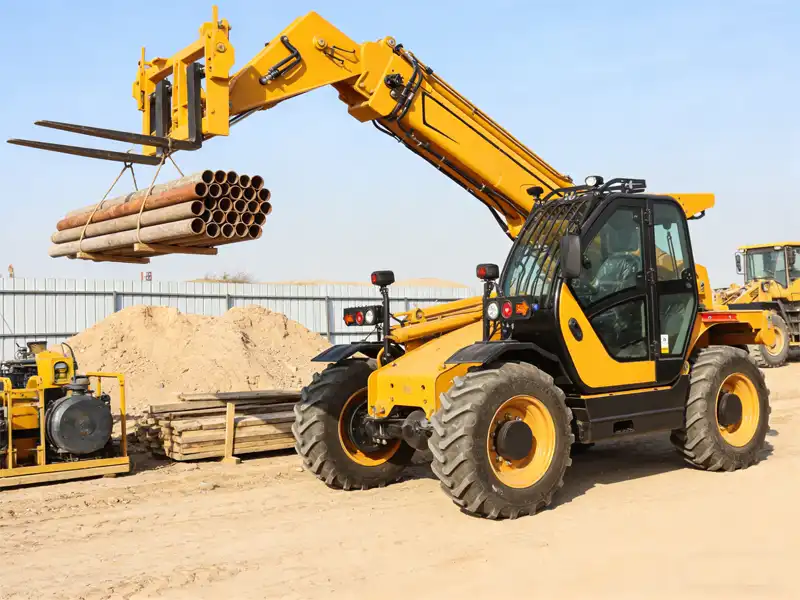
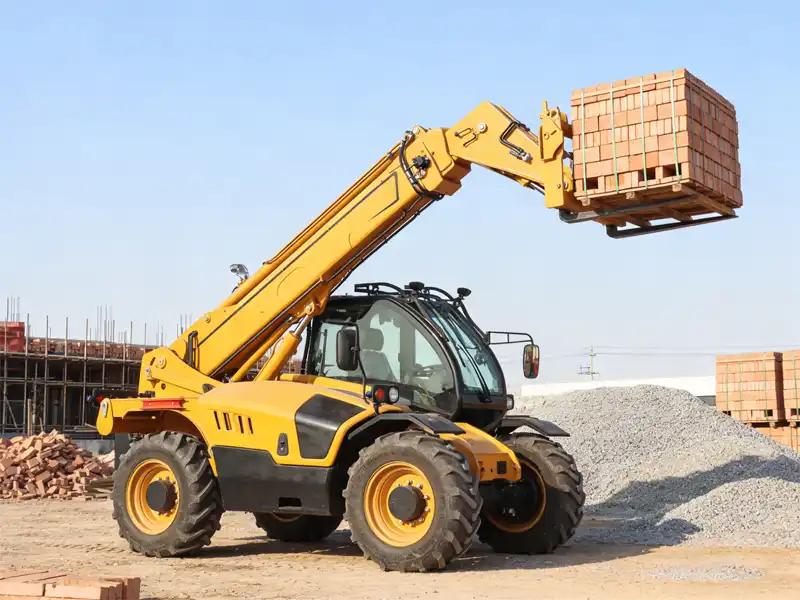
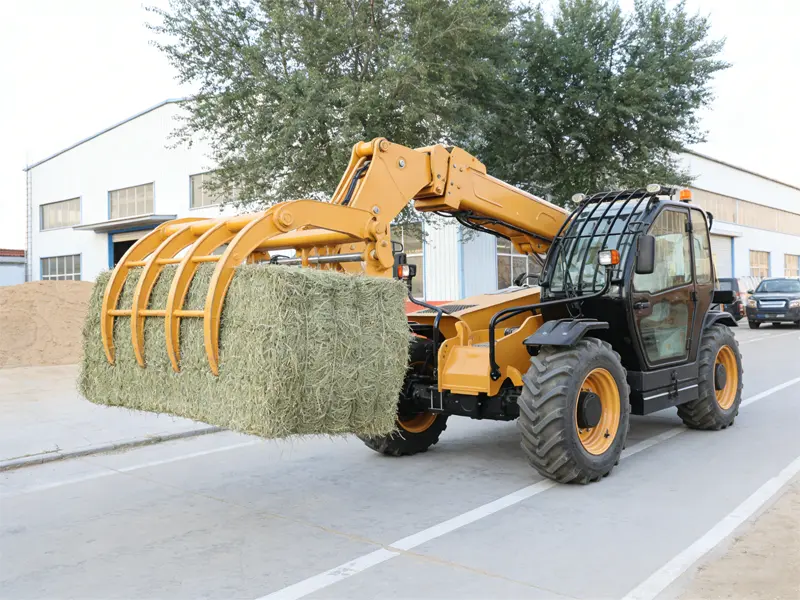
Telehandlers are highly versatile. In construction, you can use them for material handling, concrete placement, and steel lifting. In agriculture, telehandlers handle feed stacking, hay transport, and farm equipment movement. By choosing the right type of telehandler, you can streamline operations and save labor costs.
1. Construction Industry Applications
In construction, the telehandler is often the first machine on-site and the last one to leave. It functions as the “logistics hub” of the project.
- Material Handling & Distribution: Taking palletized bricks, timber, or roofing tiles from the delivery truck and placing them exactly where the crew needs them—even on the third floor of a scaffolding.
- Working in Tight Urban Spaces: Using Rotating models to act as “mini-cranes” where a full-sized crane is too expensive or too large to fit.
- Site Cleanup: Equipped with a hydraulic bucket, it can move debris, gravel, or soil across rough terrain that would get a standard truck stuck.
- Elevated Work Platform: With a certified man-basket, it becomes a mobile aerial work platform for electricians, painters, or window installers.
2. Agricultural Industry Applications
On the farm, a telehandler is often preferred over a traditional tractor for loading tasks because of its superior reach and visibility.
- Bale Stacking: A telehandler can stack hay or straw bales much higher and more safely than a front-end loader on a tractor, maximizing barn storage space.
- Livestock Management: Using attachments to clean out large animal pens, distribute feed into high troughs, or move heavy livestock equipment.
- Grain Handling: With high-capacity buckets, telehandlers are used to move grain into hoppers or pile it high in storage sheds.
- Farm Maintenance: Compact models are specifically prized here for their ability to drive through low-hanging stable doors and navigate narrow passageways between outbuildings.
Construction vs. Agriculture: Key Differences
| Feature | Construction Focus | Agriculture Focus |
| Primary Goal | Lift Height & Precision | Speed & Maneuverability |
| Common Attachment | Pallet Forks / Jib / Man-basket | Grain Bucket / Bale Grab / Silage Fork |
| Machine Type | High-reach Fixed or Rotating | Compact or High-speed Fixed |
| Terrain | Mud, Rubble, Concrete | Mud, Manure, Soft Soil |
Advantages of Using the Right Telehandler
Using the right telehandler improves productivity, reduces labor costs, and ensures safety. You gain flexibility with different attachments, reach greater heights, and handle heavier loads efficiently.
Here are the primary advantages of matching the right telehandler to your project:
1. Maximum Operational Efficiency
Using a machine tailored for the environment eliminates “dead time.”
- The Right Tool for the Space: Using a Compact telehandler in a warehouse means you aren’t performing 5-point turns to move a single pallet.
- Reduced Machine Movement: A Rotating telehandler can drop loads at multiple points from a single parking spot. This reduces the time spent driving back and forth, which speeds up the entire construction cycle.
- Faster Cycle Times: Modern telehandlers feature “flow sharing” hydraulics, allowing the boom to lift, extend, and crowd the bucket simultaneously without losing speed.
2. Enhanced Site Safety
Safety is the most significant advantage. Overloading a machine or using one with insufficient reach is a leading cause of on-site accidents.
- Stability: Choosing a machine with the correct lift capacity for your specific reach distance prevents tipping. Using outriggers on high-reach models provides a solid foundation that a standard forklift simply can’t match.
- Operator Visibility: The right model will provide clear lines of sight. For example, in agriculture, a telehandler with a low boom pivot point allows the operator to see 360° around the machine, reducing the risk of hitting livestock or workers.
- Load Management Systems (LMS): Modern, correctly-specced machines feature sensors that automatically cut off “aggravating movements” if the load becomes unstable.
3. Cost Savings & ROI
While a specialized machine (like a Roto) might have a higher rental or purchase price, the “Total Cost of Operation” is often lower.
- Fuel Economy: Running a compact machine for small tasks uses significantly less fuel than idling a massive 17-meter fixed telehandler.
- Reduced Labor Costs: One telehandler with the right attachments (buckets, forks, winches) can do the work of three different machines. This means fewer operators to pay and fewer transport fees to bring equipment to the site.
- Lower Maintenance: Operating a machine within its “sweet spot” (not constantly pushing its max weight limit) reduces wear and tear on the hydraulic system and engine, leading to fewer breakdowns.
4. Unmatched Versatility
The right telehandler acts as a multitool.
- The “Swiss Army Knife” Factor: By choosing a machine with a quick-hitch system and high hydraulic flow, you can switch from a pallet loader to a crane, to a bucket, or even a snow plow in minutes.
- All-Terrain Capability: Unlike standard industrial forklifts, the right telehandler (usually 4WD with high ground clearance) ensures that work doesn’t stop just because it rained or the site is muddy.
Advantages of Using the Right Telehandler
Using the right telehandler improves productivity, reduces labor costs, and ensures safety. You gain flexibility with different attachments, reach greater heights, and handle heavier loads efficiently. Our Xuexiao telehandlers are designed for durability and reliability, allowing you to complete projects faster and with less risk of downtime.
FAQs
conclusion
Choosing the right telehandler—whether fixed, rotating, or compact—directly impacts your operational efficiency, safety, and cost-effectiveness. Fixed telehandlers offer simplicity and reliability, rotating models excel in flexible work zones, and compact units thrive in tight spaces. At Xuexiao Machinery, we provide high-quality telehandlers tailored to your construction and agricultural needs, ensuring every project is handled with precision and confidence.