Must-Have Attachments for Your Mini Excavator
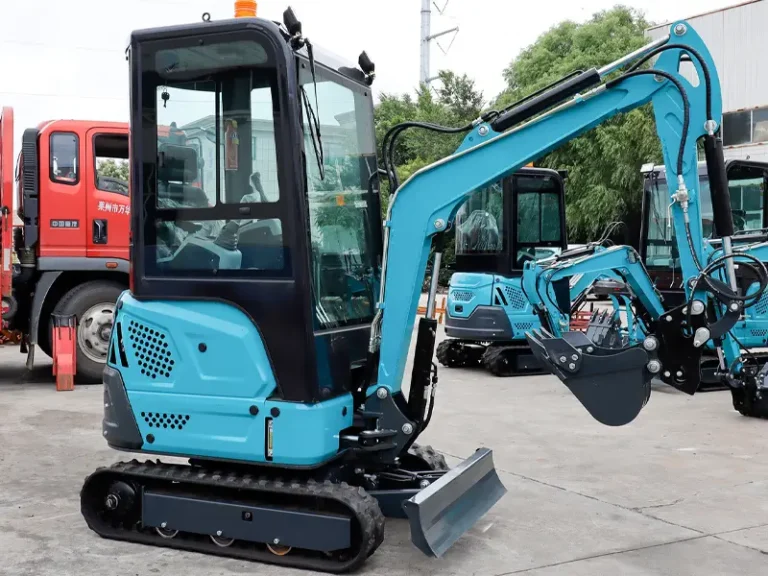
Mini excavators have become indispensable machines across construction, landscaping, agriculture, and municipal projects. However, what truly unlocks their full potential is not just the machine itself—but the wide range of mini excavator attachments that transform a single unit into a multi-functional powerhouse.
In this guide, we’ll explore the most essential mini excavator attachments, their applications, and how to choose the right ones to maximize efficiency and return on investment.
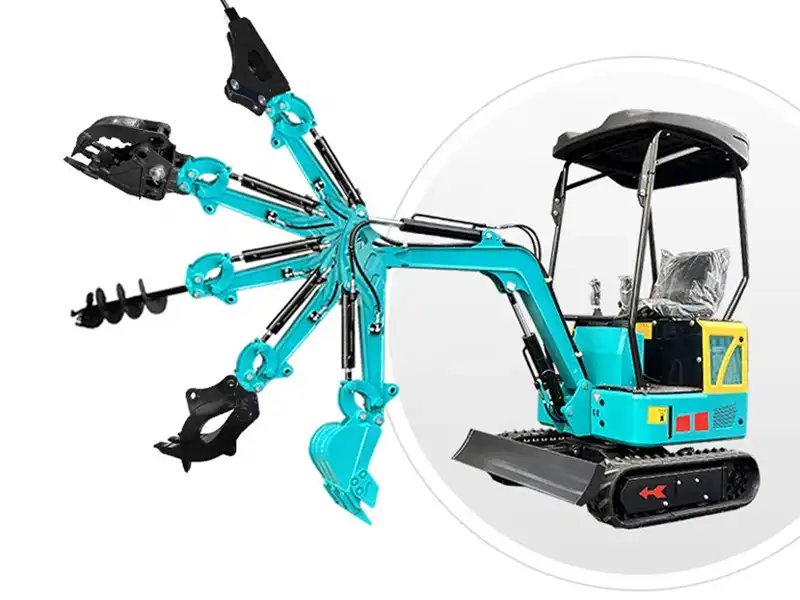
Table of Contents
What Are Mini Excavator Attachments?
Mini excavator attachments are specialized tools that can be mounted on a compact excavator to perform different tasks beyond basic digging. By switching attachments, operators can handle trenching, drilling, demolition, grading, lifting, and more—without needing multiple machines.
For contractors and equipment buyers, this flexibility means: Reduced equipment costs, increased job site efficiency,
faster project completion
Small excavator attachments refer to various specialized work tools mounted at the end of an excavator’s boom to replace the standard bucket. Driven by a hydraulic system, these attachments allow excavators to perform tasks beyond their basic function of digging. Common attachments include:
- Hydraulic breaker: Used for demolishing concrete and rock.
- Auger: Used for drilling holes, planting trees, or installing fences.
- Hydraulic shears/grab: Used for handling timber, rocks, or scrap materials.
- Grading bucket/tilt bucket: Used for precise grading work.
Why Attachments Matter for Productivity
Choosing the right excavator attachments can significantly improve operational performance. In many cases, using the correct attachment can increase productivity by over 30%.
Versatility
One machine, multiple applications
Cost efficiency
Lower investment compared to multiple machines
Labor savings
Reduced need for manual work
Precision
Improved accuracy in specialized tasks
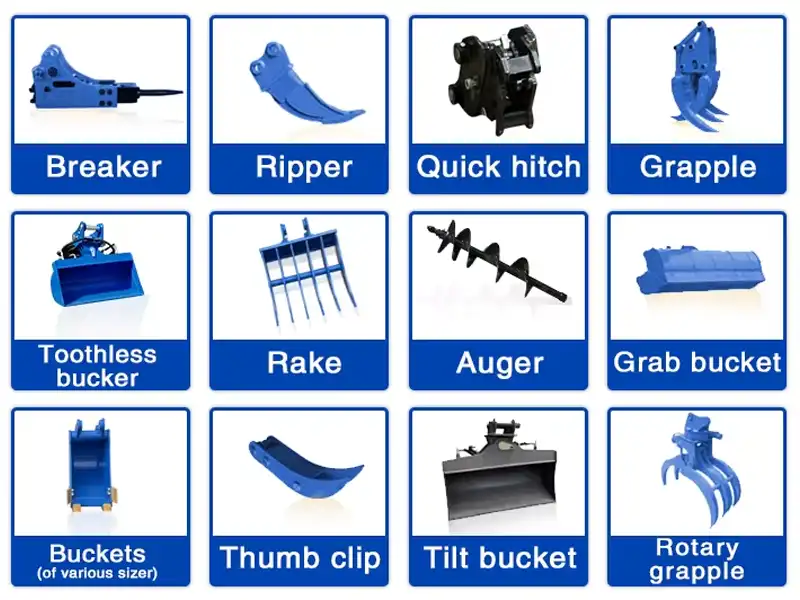
Most Essential Mini Excavator Attachments (Complete List)
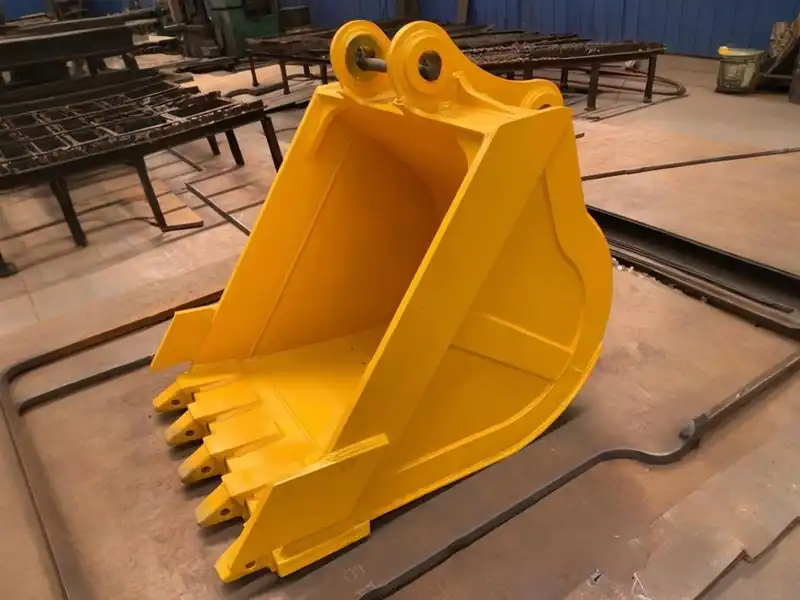
1. Buckets (Standard, Trenching, Grading)
Buckets are the most commonly used mini excavator attachments and come in various types: Standard bucket – general digging, trenching bucket – narrow trenches for pipelines, grading bucket – leveling and finishing surfaces.
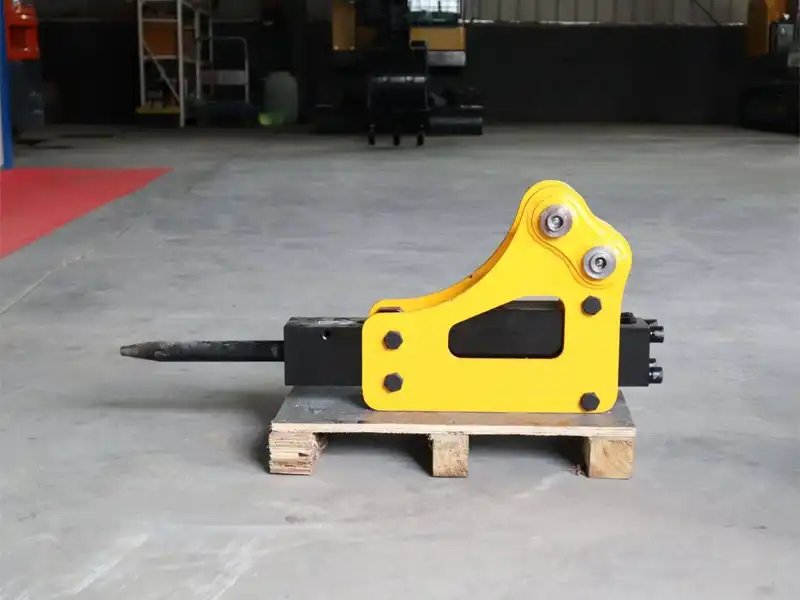
2. Hydraulic Breaker (Hammer)
Used for crushing concrete, rock, asphalt, and other materials; suitable for road maintenance or demolition work.
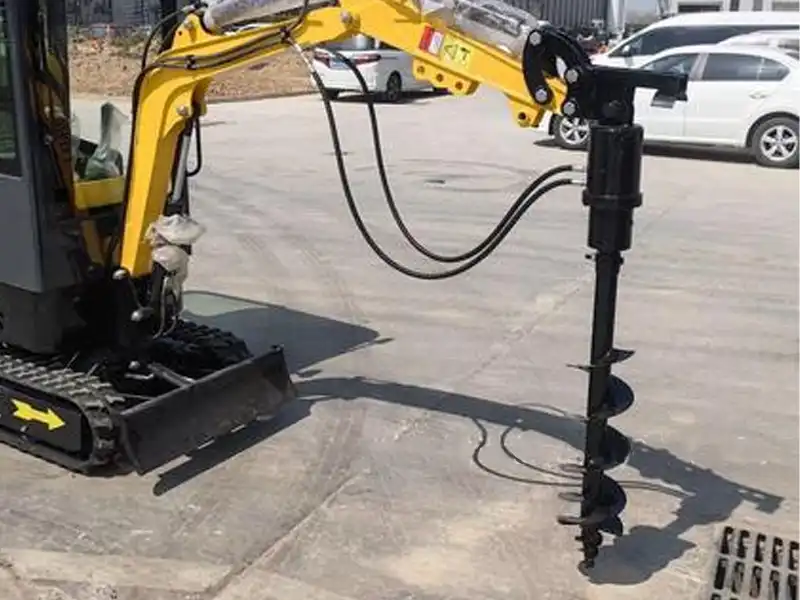
3. Auge
Used for drilling holes, such as tree planting holes, utility pole foundation pits, and well shafts.
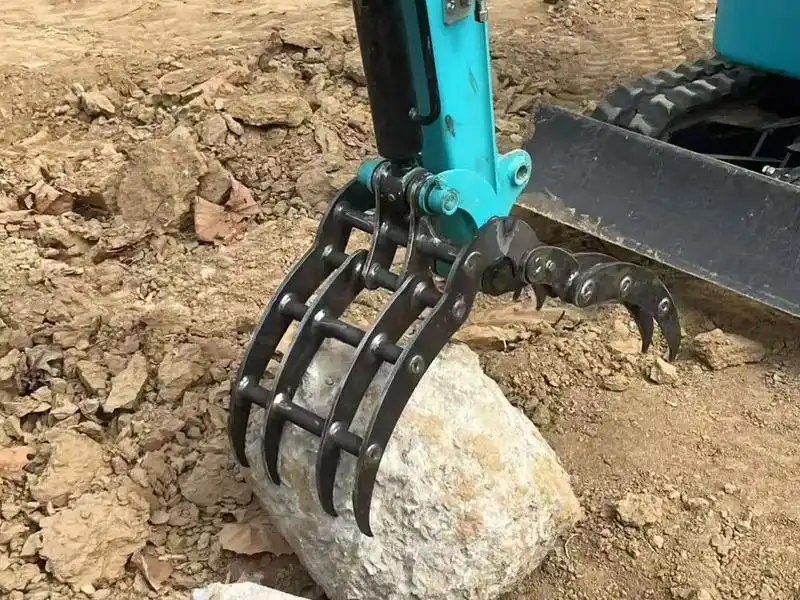
4. Grapple
Used for picking up wood, branches, rocks, and even scrap metal; commonly used in landscaping or material handling.
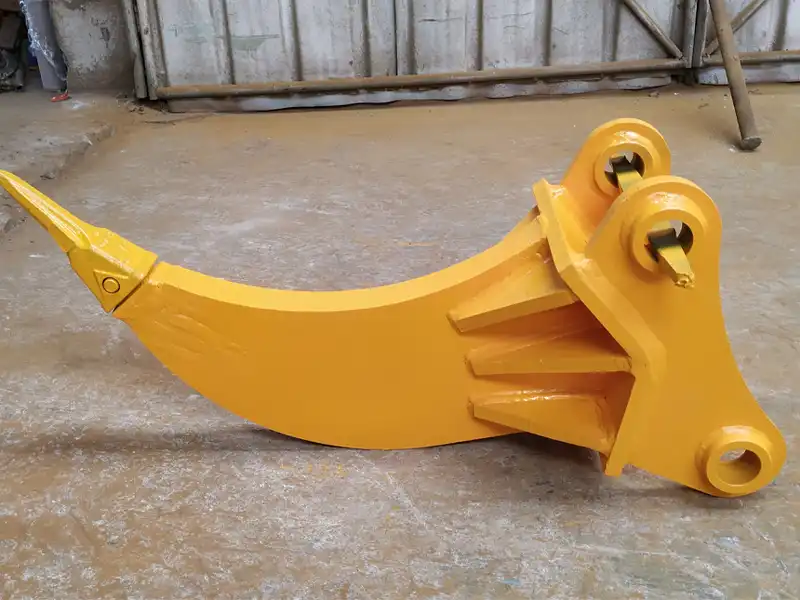
5. Ripper
Used for pre-treating weathered rock, hard soil, frozen ground, compacted surfaces, or hard soil layers to improve the efficiency of subsequent bucket operations.
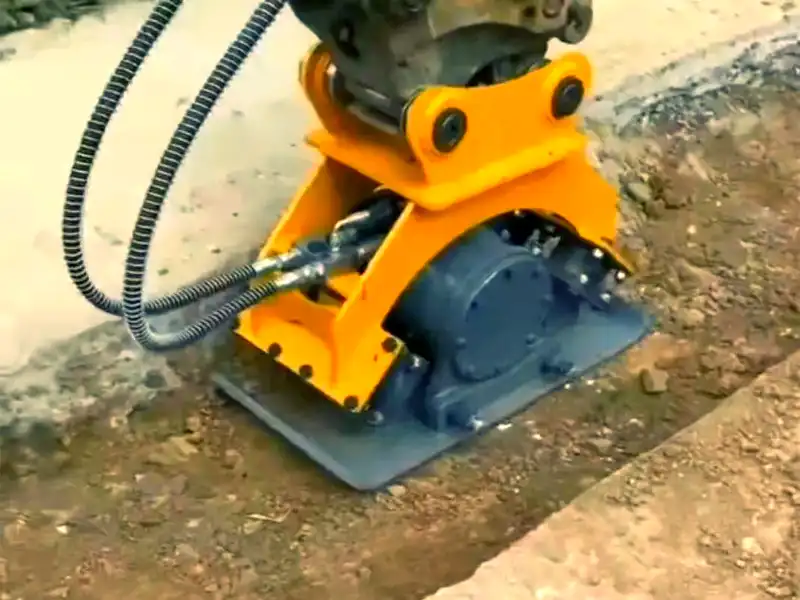
6. Compactor Plate
Used for compacting slopes, embankments, foundations, and similar structures; suitable for materials such as river sand, crushed stone, and asphalt.
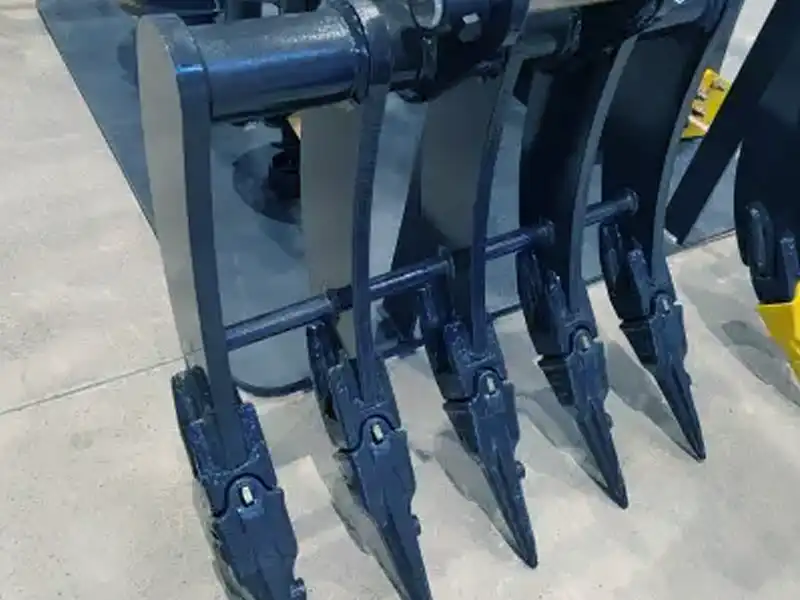
7. Rake
Used to clear surface vegetation and level the topsoil.
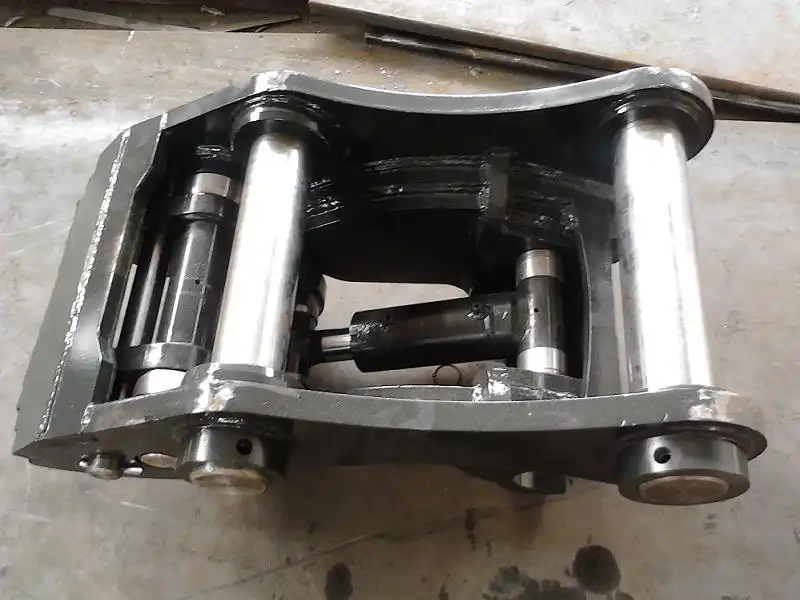
8. Quick hitch
Enable quick attachment changes within 30 seconds, significantly improving operational efficiency.
Mini Excavator Attachments by Application
Construction
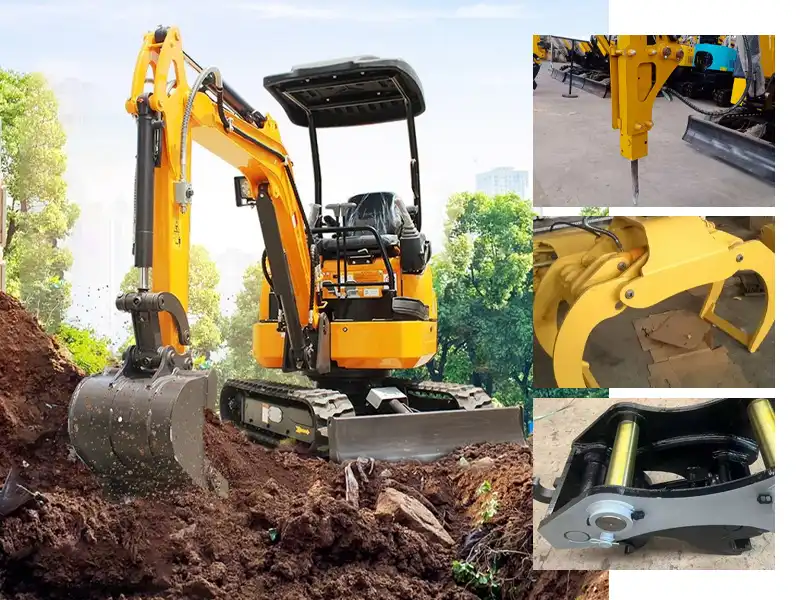
- Hydraulic Breaker: A standard tool for demolition work, used to break up concrete pavement, foundations, and rock.
- Hydraulic Shears/Pulverizer: Resembling giant scissors, these are used to cut through rebar or crush construction debris for easy recycling.
- Grapple: Like a hand, it grabs large chunks of rubble, lumber, or scrap metal.
- Quick Coupler: An essential attachment that allows for switching between different tools in a matter of seconds.
Landscaping & Forestry
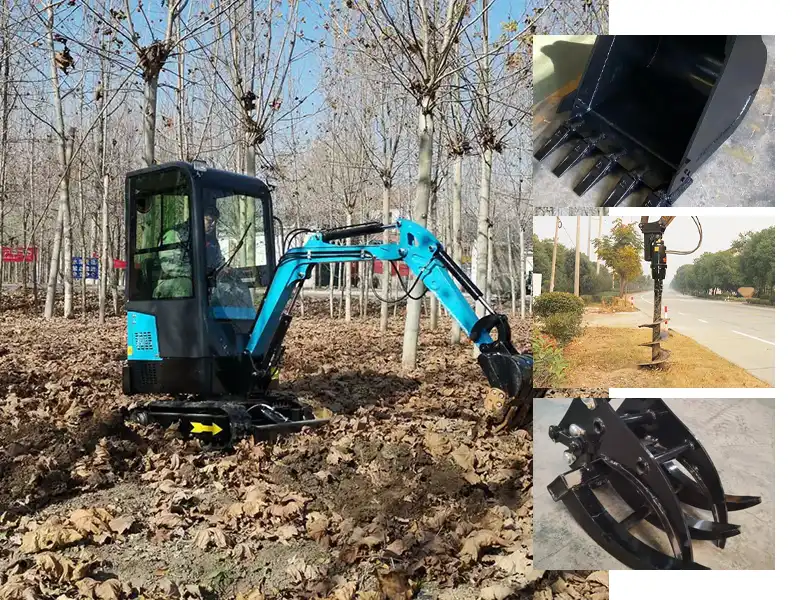
- Auger: Used for fast and precise drilling of holes in soil, ideal for fence posts, tree planting, and agricultural installations.
- Ripper: Designed to break hard or compacted soil, making land preparation and excavation much easier.
- Bucket: Versatile attachments for digging, trenching, and material handling in everyday farming operations.
Municipal & Utility Work
- Trenching Buckets: Designed for digging narrow and precise trenches, ideal for installing pipelines, cables, and drainage systems.
- Compactors: Used to compress soil and backfill materials, ensuring stable ground for roads, utilities, and infrastructure projects.
- Breakers: Powerful attachments for breaking concrete, asphalt, and hard surfaces during roadwork and utility maintenance.
How to Choose the Right Mini Excavator Attachments
1. Machine Size Compatibility
Ensure the attachment matches your excavator’s tonnage and specifications.
2. Hydraulic System Requirements
This is where problems most commonly arise. You must ensure that the “flow rate” and “pressure” requirements of the attachment fall within your excavator’s rated specifications.
Flow Rate (L/min): Primarily affects the attachment’s operating speed, such as the impact frequency of a hydraulic breaker or the rotation speed of an auger.
Pressure (MPa/Bar): Primarily determines the attachment’s force, such as the impact energy of a hydraulic breaker.
Consequences: Insufficient flow rate results in slow attachment movement; excessive pressure may damage the excavator’s hydraulic system.
3. Quick Coupler System
Verify the pin diameter, pin center spacing, and boom width. We recommend installing a quick coupler, which can reduce the time required to change attachments from several tens of minutes to just a few minutes.
4. Job Requirements
Choose based on your primary applications (digging, drilling, demolition).
| Attachment Name | Primary Applications | Selection Advice |
| Standard Bucket | General excavation, trenching, and loading soil. | Standard for mini excavators: ensure it has high-wear resistance teeth. |
| Trenching Bucket | Digging narrow, deep trenches for utilities, pipes, or fiber optics. | Usually 200–400mm wide; ideal for confined utility work. |
| Hydraulic Breaker (Hammer) | Demolishing concrete, breaking rocks, or asphalt. | Match the impact energy to the excavator’s tonnage to avoid damaging the arm. |
| Auger | Drilling holes for utility poles, tree planting, or fence posts. | Choose different flight/bits based on soil type (e.g., rocky, sandy, or clay). |
| Grapple | Handling logs, rocks, scrap metal, or construction debris. | Hydraulic 360° rotating grapples offer superior precision for sorting. |
| Thumb | Assisting the bucket in picking up irregular objects. | The “must-have” for mini excavators gives the bucket hand-like dexterity. |
| Tilting Bucket | Landscaping, grading, and slope finishing. | Features a 45° tilt to both sides, allowing for slope work without moving the machine. |
| Compactor Plate | Compacting soil in trenches or foundations. | High-frequency vibration for rapid soil stabilization after backfilling. |
| Ripper | Breaking up frozen ground, hardpan, or stubborn roots. | Concentrates all the machine’s breakout force into a single point for maximum penetration. |
Attachment Compatibility & Quick Coupler Systems
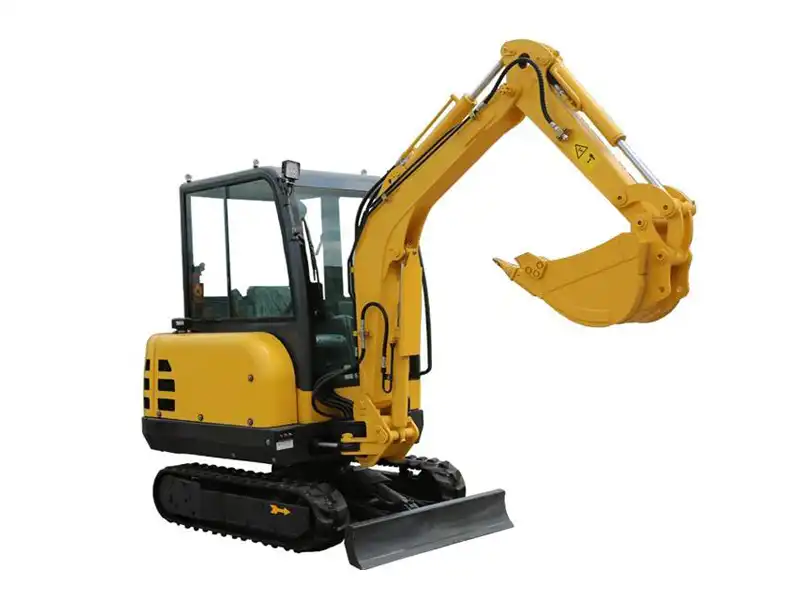
Modern mini excavators often support quick coupler systems, which allow operators to switch attachments within minutes. For contractors handling multiple tasks daily, quick couplers are highly recommended. Two main types include:
- Pin-on attachments – more secure but slower to change
- Quick couplers (quick hitch) – faster and more convenient
Maintenance Tips for Excavator Attachments
Proper maintenance reduces downtime and extends service life. To ensure long-term performance:
- Regularly lubricate moving parts
- Inspect for wear and damage
- Store attachments properly
- Replace worn components promptly

FAQs
conclusion
Mini excavator attachments are essential for maximizing the efficiency and versatility of your equipment. From buckets and breakers to augers and grapples, the right combination of attachments can significantly improve productivity across various industries.
By understanding your project needs and selecting compatible, high-quality attachments, you can turn a single mini excavator into a powerful, multi-purpose machine.