Mini Excavator vs Skid Steer: A Complete Comparison Guide
In today’s efficiency-driven construction environment, choosing the right machine is no longer just about cost—it directly impacts productivity and profitability. Among compact construction equipment, mini excavator vs skid steer has become one of the most frequently debated topics for contractors, rental businesses, and project managers.
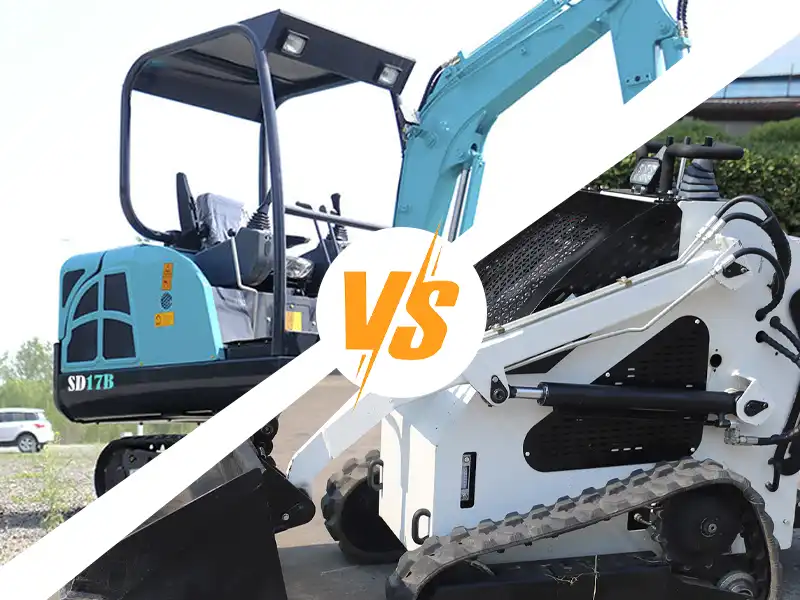
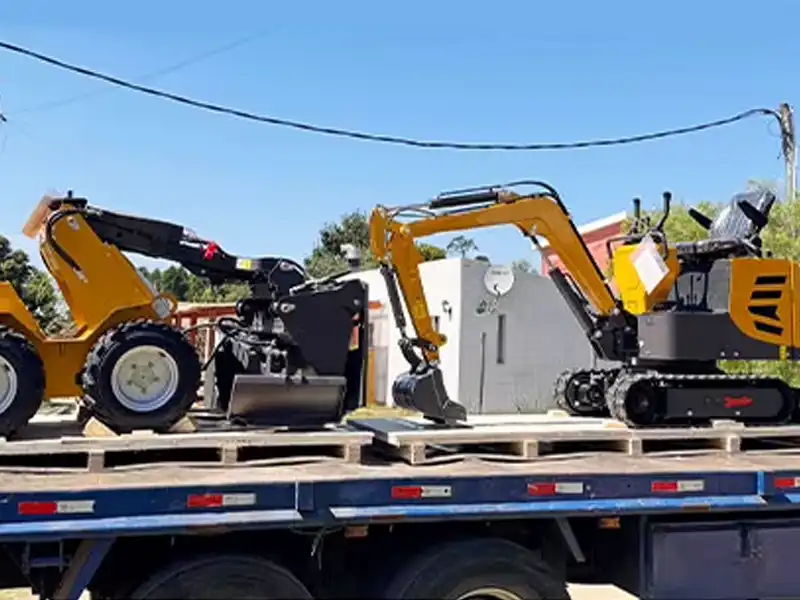
Mini excavators are known for their precision digging and performance in tight spaces, while skid steers stand out for their attachment versatility and maneuverability. Although they may seem interchangeable, each machine serves distinct roles on real job sites.
In this guide, we’ll break down the mini excavator vs skid steer difference across performance, cost, applications, efficiency, and ROI—so you can make a smarter, data-driven decision.
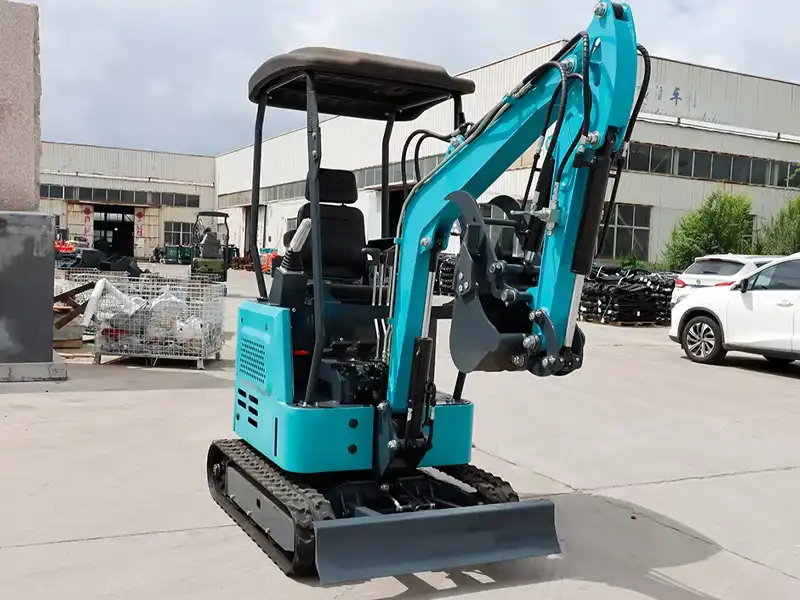
Table of Contents
What is a Mini Excavator?
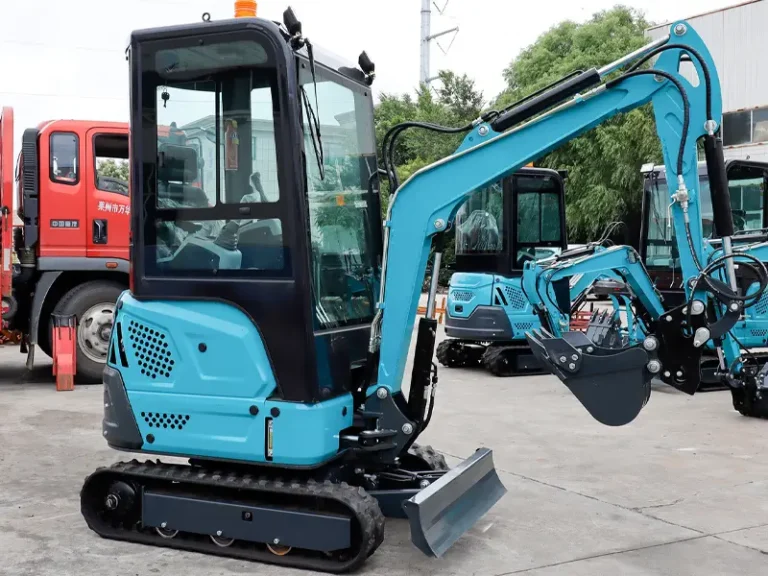
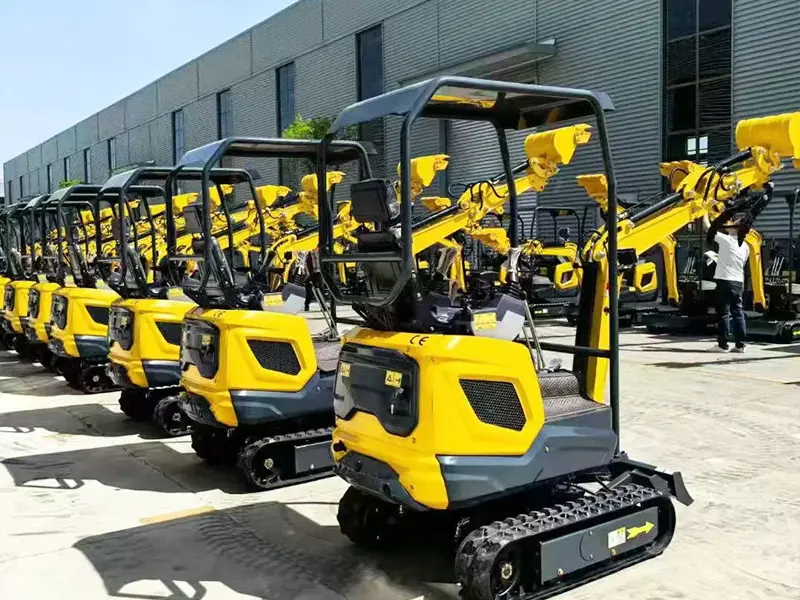
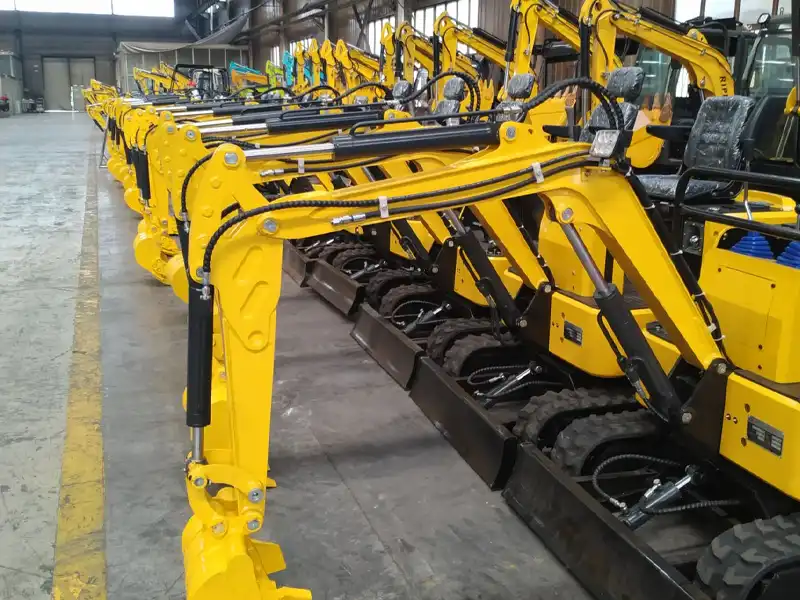
A mini excavator is a compact machine designed for precision digging tasks in tight spaces. Unlike traditional large excavators, mini excavators are smaller, lighter, and ideal for urban construction, landscaping, and earth-moving tasks.
Applications of Mini Excavators
- Landscaping: Ideal for fine grading and tree transplanting.
- Earth Moving: Perfect for small-scale excavation and soil handling.
- Construction Demolition: Suitable for precise demolition work in confined spaces.
What is a Skid Steer?
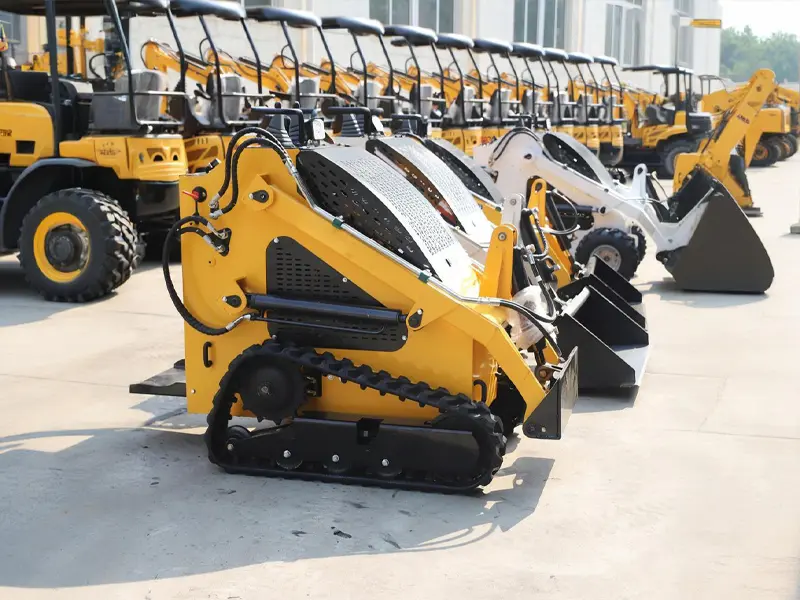
A skid steer is a compact machine known for its flexibility and versatility. It is equipped with a unique wheeled drive system that allows it to rotate 360 degrees, making it suitable for quick attachment changes for tasks like clearing, transporting, and grading.
Applications of Skid Steers
- Clearing and Hauling: Ideal for removing construction debris and stacking materials.
- Digging and Grading: Suitable for shallow digging and soil loosening.
- Snow Removal: Effective for clearing snow and ice.
Key Differences Between Mini Excavators and Skid Steers
1. Maneuverability and Operation
Mini Excavator
- Travel and Steering: Primarily tracked, with steering achieved through differential speed between the left and right tracks; the machine body can rotate 320° or 360° (commonly known as zero-tail swing, ZTS), with the upper structure rotating independently while the lower structure remains fixed.
- Work Equipment: A three-link hydraulic system comprising the boom, stick, and bucket; dual joysticks control rotation, boom, stick, and bucket movements respectively; operations focus on digging, deep excavation, and precise grading.
- Operating Logic: Primarily based on “fixed-point operation + rotational coverage,” moving before resuming work, suitable for deep excavation at fixed locations.
Skid-Steer Loader
- Travel and Steering: Wheeled / Tracked; left and right wheels/tracks are independently driven, with reverse differential drive enabling 360° on-the-spot turning (skid steering); no rotating platform.
- Work Equipment: Front-mounted lifting arm + bucket/attachments; dual joysticks control lifting and dumping; travel is controlled by two levers via forward/reverse or differential control, enabling excellent on-the-spot turning and maneuverability.
- Operating Logic: Operates while moving, with quick attachment changes; emphasizes multifunctionality, including loading, hauling, grading, snow clearing, and crushing.
2. Maneuverability and Operation
Mini Excavator
Advantages: Large track contact area and excellent stability; the upper body can rotate to cover the sides and rear, making it ideal for working near walls or obstacles (zero-tail swing).
Limitations: Cannot turn in place; turning radius is larger than that of skid-steer loaders; slower travel speed, resulting in low efficiency for long-distance site transfers; slightly longer body, making it less maneuverable in narrow passages compared to skid-steer loaders.
Applications: Trenching, foundation pits, pipeline installation, and precision excavation for landscaping.
Skid-Steer Loader
Advantages: 360° on-the-spot turning with a turning radius of nearly zero; compact body (1–1.2 m wide), allowing access to elevators, indoor spaces, and narrow alleys; highly maneuverable with quick site relocation.
Limitations: Wheels are prone to scratching the ground; the boom is front-mounted, limiting side and rear operations; stability is inferior to that of tracked mini excavators.
Applications: Indoor demolition, warehouse loading/unloading, municipal maintenance, landscaping, and material handling in confined spaces.
| Feature | Mini Excavator | Skid Steer (CTL) |
| Primary Motion | Digging/Swinging | Loading/Pushing |
| Digging Depth | Excellent (Deep) | Minimal (Surface/Shallow) |
| Travel Speed | Low | High |
| Stability | High (with boom) | Moderate (varies by center of gravity) |
| Ground Disturbance | Low (Rubber Tracks) | High (Skid turns tear turf) |
| Max Reach | High (Radius) | Low (Front reach only) |
3. Working Depth and Load Capacity
Mini Excavator
- Working Depth: Unmatched performance. The 1–3-ton class offers a maximum digging depth of 2.2–3.5 m, while the 3–6-ton class reaches 3.5–4.7 m; the combination of the dipper arm and boom enables downward digging, side digging, and precise depth control.
- Load Capacity / Digging Force: Bucket digging force 30–65 kN, boom digging force 20–36 kN; rated bucket capacity 0.05–0.3 m³; lifting capability focuses on “deep downward digging,” with limited horizontal lifting and dumping height.
- Capabilities: Deep excavation, precision digging, trench forming, and foundation construction.
Skid-Steer Loader
- Working Depth: Limited to shallow excavation. Using a front-mounted bucket or digging attachment, the maximum digging depth is 0.5–1.2 m; it cannot dig deep downward and is only suitable for shallow trenches, grading, and topsoil removal.
- Load/Lifting Capacity: Rated load 300–1,500 kg, lifting height 2–3.5 m, with a long unloading reach suitable for loading/unloading trucks or high platforms; digging force 4–10 kN, significantly lower than that of a mini excavator.
- Capabilities: Loading, hauling, stacking, leveling, and versatile operations with quick attachment changes.
Cost and Efficiency
- Mini excavators have higher purchase and rental costs but provide higher work efficiency, especially for precise digging tasks.
- Skid steers are less expensive to rent but are less efficient, especially for earth-moving operations.
Core Difference Summary Table
| Comparison Item | Mini Excavator | Skid Steer Loader |
|---|---|---|
| Core Positioning | Deep excavation & precise digging | In-place steering & multi-function loading |
| Steering Mode | Track differential + upper structure slewing | Left/right track/wheel differential, 360° in-place turning |
| Flexibility | Stable operation near walls & fixed points; large turning radius | Excellent for narrow space access & zero-radius turning |
| Max Digging Depth | 2.2–4.7m (1–6 ton class) | 0.5–1.2m (only shallow digging) |
| Digging Force | 30–65kN (Bucket) | 4–10kN |
| Rated Load | Focus on digging force; limited lifting load | 300–1500kg, strong lifting & unloading capacity |
| Typical Attachments | Digging bucket, breaker, hydraulic shear, log grapple | Loader bucket, fork, sweeper, snow blower, planer |
| Best Application | Trenching, foundation pit, pipeline works, and landscaping excavation | Indoor work, narrow lanes, loading & handling, municipal maintenance, quick attachment replacement |
How to Choose Between a Mini Excavator and a Skid Steer?
Choosing the right equipment depends on your project’s needs. If your tasks require deep digging and precise operation, a mini excavator is the best choice. On the other hand, if you need more flexibility and attachment support, a skid steer might be a better option.
Cost Analysis of Mini Excavators and Skid Steers
Mini excavators typically cost between $200 and $500 per day for rental, while skid steers generally range from $150 to $400. Additionally, mini excavators have higher maintenance costs due to the need for regular servicing.

FAQs
conclusion
Whether you’re working on landscaping, small earth-moving tasks, or large construction projects, choosing the right equipment will directly impact efficiency and costs. Both mini excavators and skid steers have their pros and cons, so selecting the right one for your needs is crucial for ensuring a smooth project.
Do you have a project in mind, but aren’t sure which machine fits your budget? Drop a comment below, and let us help you analyze your specific jobsite requirements!