Zero Tail Swing vs. Standard Mini Excavator: Which One Should You Choose?
When selecting a mini excavator, in addition to the machine’s total weight, digging depth, and engine power, the swing mechanism is also a factor that warrants careful consideration. Especially in residential construction, municipal projects, and operations in confined spaces, the swing radius at the rear of the machine can directly impact construction efficiency and operational safety. Currently, there are two common swing configurations for mini excavators on the market: zero tail swing and standard mini excavator (also known as conventional tail swing). The most obvious difference between the two lies in whether the counterweight extends beyond the track width when the upper structure rotates.
The key advantage of a zero tail swing mini excavator is that the rear never extends beyond the track width during 360° rotation, allowing it to turn on the spot and operate in confined spaces such as against walls or in narrow alleys. In contrast, the rear of a standard mini excavator extends beyond the track width, requiring a safety clearance to be maintained. The fundamental difference between the two lies in their ability to adapt to space constraints, rather than simply the size of the machine itself. Which one is better suited for your project? This article will compare the two in terms of structural design, swing radius, stability, digging performance, operating costs, and practical applications.
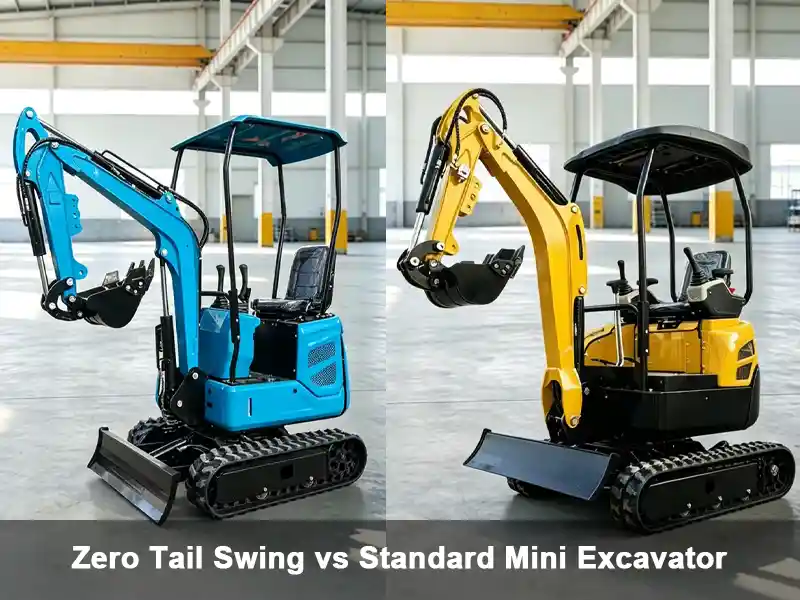
Table of Contents
What Is the Difference Between Zero Tail Swing and Standard Mini Excavators?
The main difference between the two types of equipment lies in the space occupied by the rear counterweight when the machine’s upper structure rotates.
The rear swing range of a zero tail swing mini excavator is limited to within the track width; when the machine rotates, the counterweight does not extend significantly beyond the outer edge of the tracks. This design reduces the likelihood of the rear of the machine colliding with walls, vehicles, or other obstacles.
Standard mini excavators typically feature a conventional tail swing design. When the upper structure rotates, the rear counterweight extends beyond the track width, so more space must be reserved for the rear of the machine.
| Comparison Item | Zero Tail Swing | Standard Mini Excavator |
|---|---|---|
| Rear swing radius | Usually stays within track width | Rear counterweight extends beyond track width |
| Tail overhang | No overhang beyond track width | Noticeably overhangs |
| Confined-area operation | Can rotate 360° in place | Requires repeated inching forward/backward |
| Working near walls | More convenient | Must watch tail clearance |
| Manufacturing cost | Higher | Lower |
| Lifting capacity | Depends on model | Depends on model |
| Common applications | Urban, residential, landscaping | General earthwork and open-site construction |
What Is a Zero Tail Swing Mini Excavator?
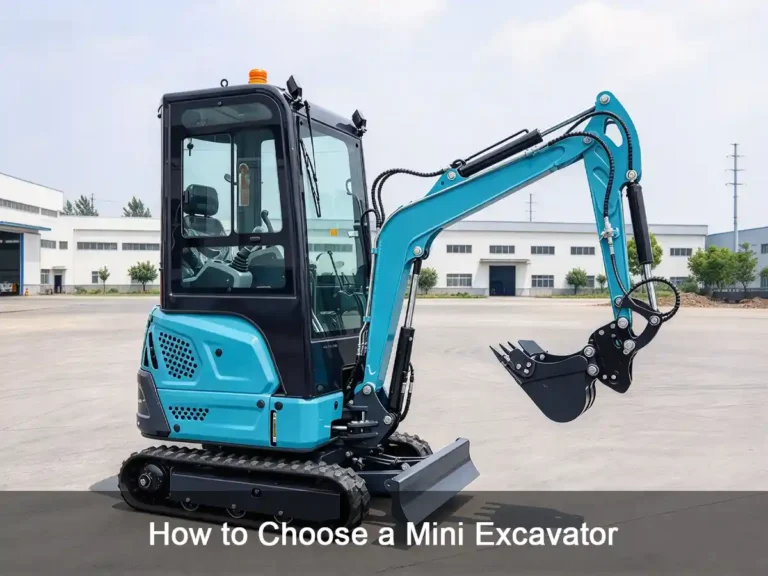
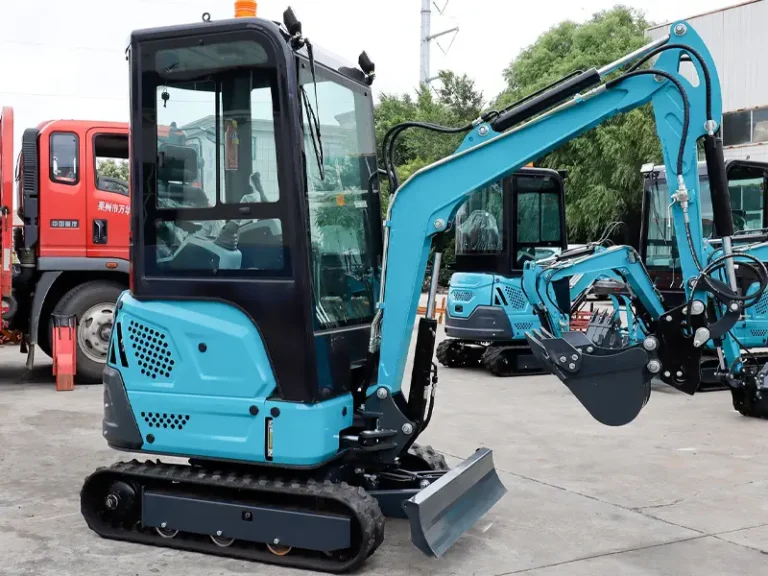
A zero tail swing mini excavator, also known as a zero tail swing excavator or ZTS Mini Excavator, is a small excavator featuring a zero tail swing rotation design.
Features: When the upper structure rotates, the rear counterweight generally remains within the outer edge of the tracks, rather than extending significantly beyond the machine’s chassis as in traditional slewing mechanisms.
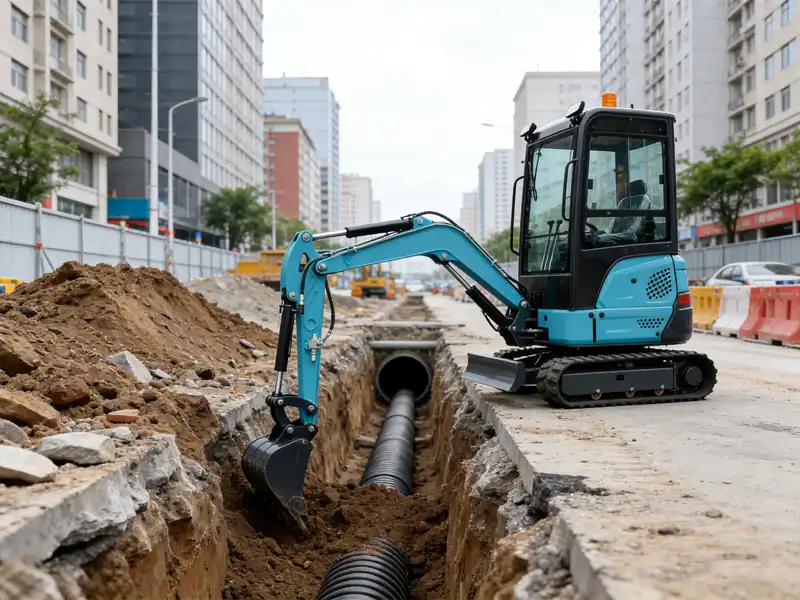
Advantages: This design is particularly useful for projects with limited working space. For example, when excavating a trench next to a residential building, the machine may need to work right up against the wall.
How Does Zero Tail Swing Design Work?
The zero-tail swing design is achieved primarily by optimizing the counterweight layout, upper structure, and swing radius.
When the excavator is performing rotation operations, the rear counterweight does not extend significantly beyond the track width. This allows operators to dig, turn, and unload soil in confined areas with less concern about the machine’s rear clearance.
However, Zero Tail Swing does not mean the machine is completely immune to collisions. The boom, bucket, cab, and other parts of the upper structure still require sufficient operating space, and the swing range should still be controlled based on site conditions during actual operations.
Features of a Zero Tail Swing Excavator
- Reduced Rear Swing Radius: The smaller rear swing radius makes it ideal for construction sites with limited space.
- Compact Working Design: Makes it easier to work near buildings, fences, and other obstacles.
- Improved Maneuverability: Reduces rear space constraints, making it easier to reposition the machine in tight areas.
- Flexible Job Site Applications: Suitable for projects such as residential construction, landscaping, municipal maintenance, and utility line installation.
It is important to note that Zero Tail Swing primarily improves the turning radius at the rear; it does not mean that the overall dimensions of the machine are smaller in all directions.


Applications of Zero Tail Swing Mini Excavators
- Residential Construction: Excavation of residential foundations and construction around buildings.
- Landscaping: Yard renovations, landscaping, and earthwork.
- Urban Construction: Urban road maintenance and construction in confined spaces.
- Utility Installation: Trench excavation for water pipes, cables, and drainage pipes.
- Working Along Buildings: Excavation near buildings, walls, and other fixed structures.
What Is a Standard Mini Excavator?
“Standard Mini Excavator” typically refers to a standard rotating mini excavator with a conventional tail swing design. Unlike zero-tail-swing designs, the rear counterweight on this type of equipment extends beyond the track width when the upper structure rotates. The position and structure of the counterweight must be matched to the machine’s total weight, the boom’s working range, and load requirements.
Traditional swing-type excavators are widely used in the market and can meet a variety of needs, including agricultural construction, foundation excavation, road construction, and general earthwork.
Features of Standard Mini Excavators
- Conventional Counterweight Layout: The rear counterweight typically extends beyond the track width.
- Flexible Machine Configurations: A wide selection of models is available in various tonnage classes and specifications.
- General Excavation Applications: Capable of handling a variety of routine excavation and earthmoving tasks.
- Practical for Open Job Sites: On job sites with ample swing space, rear space constraints are relatively minimal.
Applications of Standard Mini Excavators
- General Construction: General construction and earthwork.
- Foundation Excavation: Excavation for building foundations and subgrades.
- Agricultural Projects: Agricultural water conservancy, land reclamation, and agricultural infrastructure.
- Road Construction: Road construction and subgrade preparation.
- Open Excavation Sites: Trenching and earthwork projects with ample space.
If there are no significant space constraints at the job site, the Standard Mini Excavator is also a very practical choice.
Zero Tail Swing vs Standard Mini Excavator: 7 Key Differences
After understanding the basic characteristics of the two designs, it is also necessary to compare them in light of actual construction requirements. For equipment purchasers, swing radius is just one of the factors to consider when selecting a model; the overall dimensions, digging capacity, stability, and maintenance costs are equally important.
1. Tail Swing Radius and Rear Clearance
Tail Swing Radius is an important parameter for measuring the rear swing range of an excavator.
The rear swing range of a Zero Tail Swing Mini Excavator is typically limited to within the track width, which helps minimize space conflicts between the rear of the machine and obstacles when working near walls or buildings.
The rear counterweight of a Standard Mini Excavator extends beyond the track width, requiring additional space for rotation during operation.
2. Maneuverability in Tight Working Spaces
In narrow residential yards, between buildings, or alongside city streets, the zero tail swing design reduces the space required for the machine to swing its rear. When adjusting the upper structure’s direction, the operator does not need to leave as much clearance for the rear counterweight as with conventional swing designs.
Standard mini excavators can also operate in confined spaces, but greater care must be taken regarding the rear swing radius. If space on-site is limited, it may be necessary to reposition the equipment frequently.
3. Stability and Lifting Capacity
Stability is a factor that cannot be overlooked when selecting a compact excavator, especially when performing lifting, lateral lifting, and operations involving heavy loads. An excavator’s stability is not determined solely by its rear swing mechanism; it also depends on the machine’s total weight, counterweight distribution, track width, center of gravity, ground conditions, and the direction of the load.
4. Machine Width and Site Accessibility
Many buyers prioritize whether a mini excavator can pass through site entrances, access roads and transport passages when selecting a machine. It is important to distinguish two key specifications: Overall Machine Width and Tail Swing Radius. Zero tail swing does not necessarily mean the machine is narrower. Some zero-tail-swing models may have a larger overall width to accommodate counterweight layout and undercarriage design.
Therefore, buyers should verify the transport width, track width, overall machine length and swing coverage during operation before purchase. These dimensions must be checked in advance if the excavator needs to go through narrow doorways into residential yards or be transported on restricted-width roads.
5. Digging Performance and Working Efficiency
The swing structure does not directly determine an excavator’s digging performance. The key factors that affect digging capability include: Maximum Digging Depth, Maximum Digging Reach, Bucket Digging Force, Arm Digging Force, hydraulic system performance and engine power.
Both zero tail swing and standard tail swing excavators can be fitted with different engines, hydraulic systems and working attachments. If your main tasks involve deep trenching, foundation work or heavy-duty earthmoving, it is recommended to compare the digging parameters of specific models based on your actual job requirements, rather than making decisions solely based on whether it is a zero tail swing or standard tail swing unit.
6. Operating Comfort and Visibility
Operator comfort also shapes the long-term experience of using the machine. Mini excavators vary widely in cab space, seat design, joystick layout, visibility and control systems. For operators who frequently work around buildings, a clear view of the surrounding environment is especially critical.
Zero Tail Swing reduces the space required for rear swing, yet operators still need to watch the movement range of the boom, bucket and other machine parts. Before purchase, it is advisable to check the cab layout, field of view and control scheme in person, and pick the model that best matches your working habits.
7. Purchase Price and Maintenance Costs
| Cost Factor | What to Consider |
|---|---|
| Initial Purchase Price | Base machine price and optional accessory costs |
| Fuel Consumption | Fuel consumption under different working conditions |
| Routine Maintenance | Daily service and wear part replacement |
| Spare Parts | Parts availability and lead time |
| Transportation | Machine shipping and loading/unloading expenses |
| After-Sales Support | Technical assistance and after-sales service |
Pros and Cons of Zero Tail Swing Mini Excavators
Advantages of Zero Tail Swing Excavators
The most notable feature of zero-tail-swing compact excavators is that they do not require additional rear clearance when rotating; however, this design is suited to specific applications and is not appropriate for every construction site. Below is a summary of its main advantages and limitations:
advantages:
- Improved rear clearance: When the machine rotates, the rear counterweight does not extend significantly beyond the track width, reducing the risk of colliding with surrounding obstacles.
- Suitable for confined workspaces: Ideal for construction in residential yards, on narrow roads, and around buildings.
- Less space required for rear rotation: In many work situations, there is no need to repeatedly move the machine to adjust its position due to insufficient rear clearance.
- Suitable for urban construction projects: It is highly practical for projects such as emergency repairs, pipeline installation, and landscaping in urban areas.
limitations:
- Some zero-tail swing models have a relatively wide overall width, which does not necessarily make them easier to maneuver onto a job site.
- The counterweight layout and overall machine structure directly affect the lifting capacity of a single unit.
- Digging depths and operational ranges vary significantly across different models and cannot be generalized.
- On open, unobstructed job sites, the space advantages of zero-tail swing models are difficult to realize.
- The selling price is determined by specific configurations; zero-tail swing models are not necessarily cheaper than standard swing models.
Is Zero Tail Swing Worth the Investment?
If the equipment is used for extended periods in confined spaces, the space-saving advantage of zero-tail swing should be a top priority. In work scenarios close to buildings—such as trenching for drainage ditches, laying utility lines, and site grading in residential projects—it can effectively reduce the operational constraints caused by rear swing. However, if the equipment is primarily used in farm fields, open construction sites, or large-scale foundation projects, a standard swing model would be more suitable. The final selection should be determined by comprehensively considering equipment specifications, frequency of use, and the procurement budget.
When Should You Choose a Zero Tail Swing Mini Excavator?
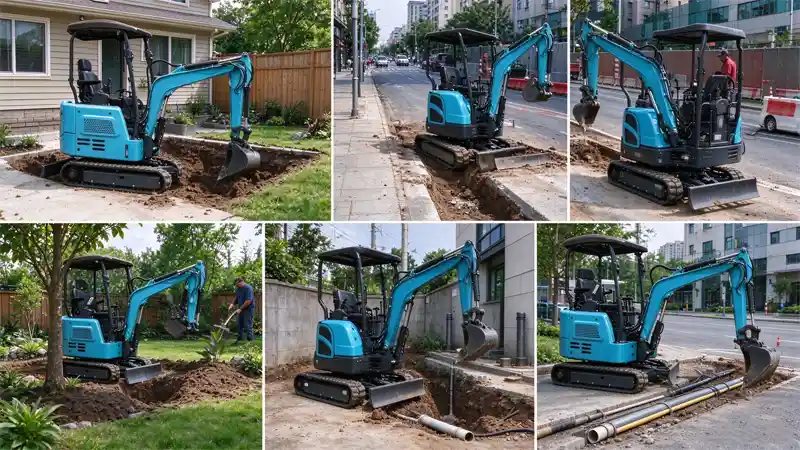
When space is limited at a construction site, or when an excavator needs to operate frequently in close proximity to buildings, walls, and other obstacles, the zero tail swing mini excavator is a top choice. It minimizes the space required for the machine to swing at the rear, allowing the equipment to perform excavation and turning maneuvers with greater agility in confined areas. The following construction scenarios are particularly well-suited for the zero tail swing design:
Residential Construction and Backyard Projects
Suitable for applications such as excavating house foundations, yard drainage, and construction around fences. Since workspaces are often limited, this design helps prevent the rear of the machine from colliding with buildings or fences when it turns.
Urban Construction and Roadside Maintenance
Construction on urban roads, municipal maintenance, and public facilities is often constrained by road width and surrounding buildings. This equipment reduces the space required for rear turning, making it suitable for operations in confined areas.
Landscaping and Garden Excavation
We specialize in long-term projects such as landscape renovations, small courtyard renovations, interior demolition, and construction in confined spaces like narrow excavation pits.
Utility Installation in Confined Areas
In water pipe, cable, and sewer installation projects, excavators are often required to dig trenches along road edges or near buildings. The zero-tail swing design reduces the space constraints caused by rear rotation, making it well-suited for construction tasks that require frequent adjustments to the direction of operation.
When Is a Standard Mini Excavator the Better Choice?
If there is ample space at the job site and the work primarily involves routine earthwork excavation, foundation construction, or material handling, a standard mini excavator is typically the more suitable choice.
Open Construction Sites
In construction projects where the site is open and there are few surrounding obstacles, the machine has sufficient space to swing, so there is no need to give special consideration to the issue of the rear swing.
Foundation and General Excavation Work
When it comes to foundation excavation, trench construction, and general earthwork for buildings, the focus is typically on excavation depth, operational efficiency, and equipment configuration.
Agricultural and Rural Projects
Projects such as farmland consolidation, irrigation ditch excavation, and land reclamation typically involve relatively spacious work areas. Standard mini excavators are capable of handling a wide range of routine construction tasks and can be easily equipped with various attachments to meet project requirements.
Lifting and Material Handling
If you frequently need to lift pipes, building materials, or other materials during construction, you should pay close attention to the equipment’s rated lifting capacity, working radius, and overall stability. Some standard models may have different counterweights and lifting configurations for the same tonnage; be sure to refer to the lifting performance specifications provided by the manufacturer for details.
Before choosing between these two configurations, consider your jobsite conditions, operating space, digging requirements, and machine specifications. You can also read our guide on [how to choose a mini excavator] for a more detailed selection process.
Email: xinhao@snowyowlmachine.com
TEL/WA: +86 19939724755
FAQs


conclusion
The choice between a zero tail swing and a standard mini excavator depends on the space available at the job site, the nature of the work, and the required equipment performance. The zero tail swing mini excavator is better suited for residential construction, urban operations, and space-constrained scenarios such as working near walls, as it requires less space for tail swing; the standard mini excavator, on the other hand, is suitable for conventional earthwork, foundation construction, and agricultural projects in more open areas. The actual selection must also take into account the machine’s overall width, digging depth, lifting capacity, working range, and transportation conditions—it cannot be determined solely based on the tail structure.
If you are in the market for a mini excavator or are unsure which configuration is best suited for your project, please feel free to contact Xuexiao Machinery. Please provide the dimensions of the construction site, the primary tasks to be performed, the required digging depth, the machine’s tonnage, and transportation conditions. If you have a specific model in mind, on-site photos, or detailed procurement requirements, please include them as well to help us understand your project needs and recommend the appropriate equipment configuration.