What is the Difference Between Backhoe and Loader?
In construction and earthmoving projects, choosing the right equipment directly affects efficiency, cost control, and project timelines. Many buyers often ask: What is the difference between a backhoe and a loader?
A backhoe loader combines a front loader and rear excavator arm, while a loader (usually a wheel loader) is primarily designed for lifting and transporting materials. Although both machines are used in construction, their structure, function, and job site roles differ significantly.
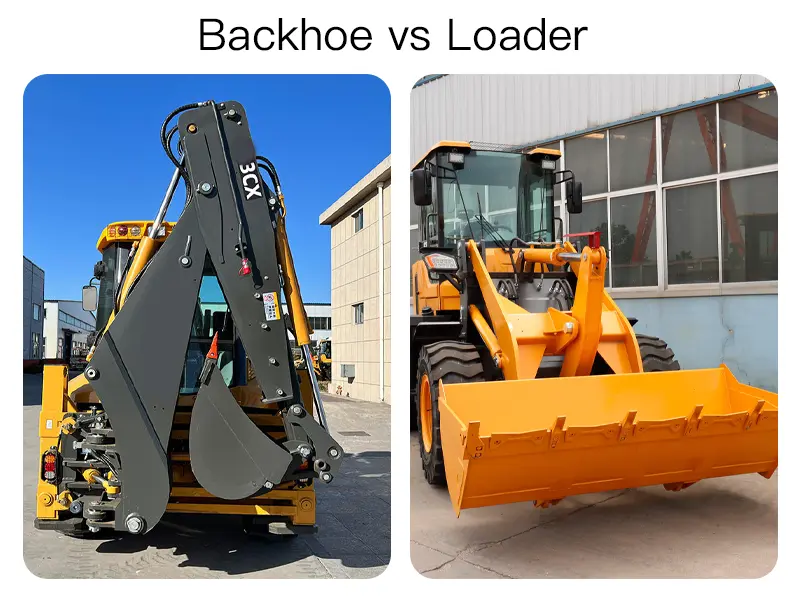
Table of Contents
What Is a Backhoe Loader?
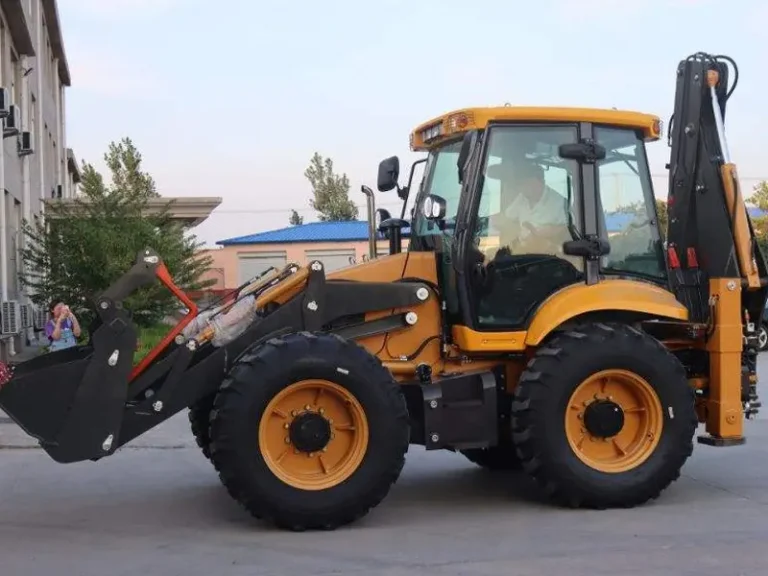
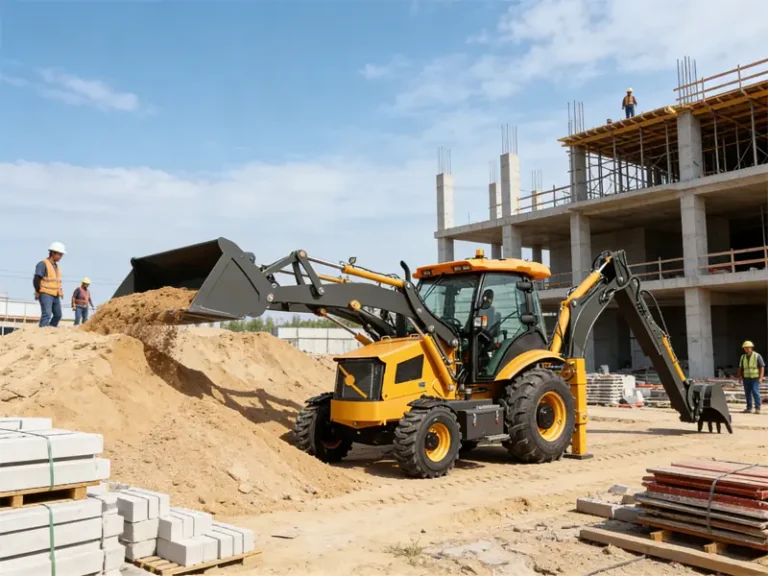
A backhoe loader is a versatile piece of construction equipment that combines a front loader bucket and a rear digging arm (backhoe) into one compact machine. It is widely used in construction, roadwork, agriculture, landscaping, and municipal projects due to its flexibility and efficiency.
Structure and Main Components
A standard backhoe loader consists of two primary working attachments:
- Front Loader Bucket – Used for lifting, carrying, and loading materials such as soil, sand, gravel, or debris.
- Rear Backhoe Arm – Designed for digging trenches, foundations, and underground utility lines.
This dual-structure design allows operators to switch between loading and excavation tasks without changing equipment, significantly improving productivity on job sites.
Backhoe Loader Working Principle
The working principle of a backhoe loader is based on a hydraulic power system. The engine drives hydraulic pumps that generate pressurized fluid, which is then directed to hydraulic cylinders and motors. These components control the movement of the loader bucket, digging arm, boom, and stabilizers.
- Lift heavy loads with precision
- Perform smooth digging operations
- Maintain stability during excavation
Modern backhoe loaders feature advanced hydraulic controls that improve accuracy, responsiveness, and fuel efficiency.
Why Is a Backhoe Loader So Versatile?
One of the biggest advantages of a backhoe loader is its multi-function capability. With optional attachments such as augers, breakers, grapples, or compactors, it can perform tasks including:
- Trenching
- Material handling
- Demolition
- Light grading
- Snow removal
This makes it a cost-effective solution for contractors who need one machine to handle multiple tasks.
Compact Design for Small and Medium Projects
Compared to large excavators, backhoe loaders are more compact and easier to maneuver. Their smaller footprint makes them ideal for:
- Urban construction sites
- Roadside utility work
- Residential projects
- Small farm operations
For small to mid-sized contractors, a backhoe loader provides an excellent balance between power, flexibility, and investment cost.
What Is a Loader?
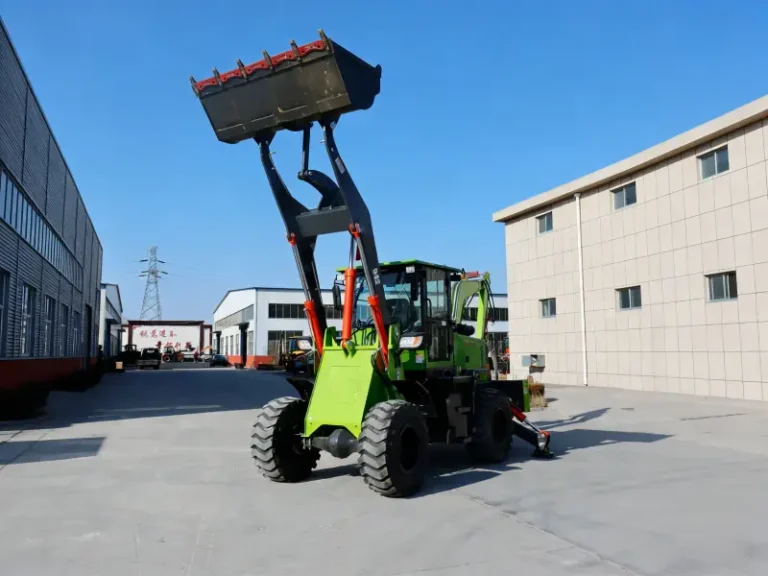
A loader is a type of heavy construction machine primarily designed for lifting, loading, and transporting materials such as soil, sand, gravel, rocks, and debris. It is widely used in construction sites, mining operations, road projects, agriculture, and material handling industries.
The main purpose of a loader is to move large volumes of material efficiently from one location to another, often loading trucks, hoppers, or stockpiles.
Main Functions of a Loader
A loader is built to handle three core tasks:
- Lifting – Raising heavy materials using a front-mounted bucket
- Loading – Transferring materials into trucks or containers
- Material Handling – Moving bulk materials across short distances
Because of its powerful hydraulic lifting arms and large bucket capacity, a loader significantly improves job site productivity.
Common Types of Loaders
There are several types of loaders designed for different applications:
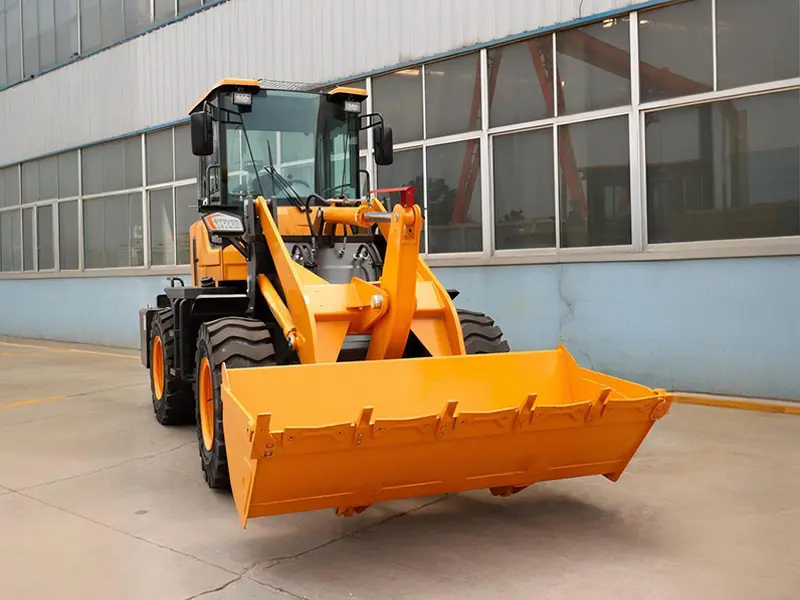
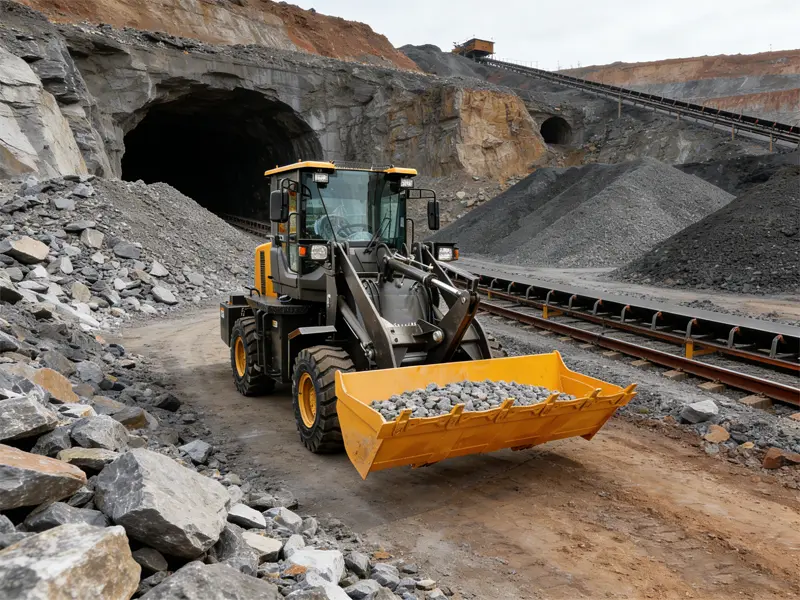
1. Wheel Loader
A wheel loader operates on rubber tires and is known for high mobility and fast travel speed. It is commonly used in construction sites, quarries, and large-scale material handling operations.
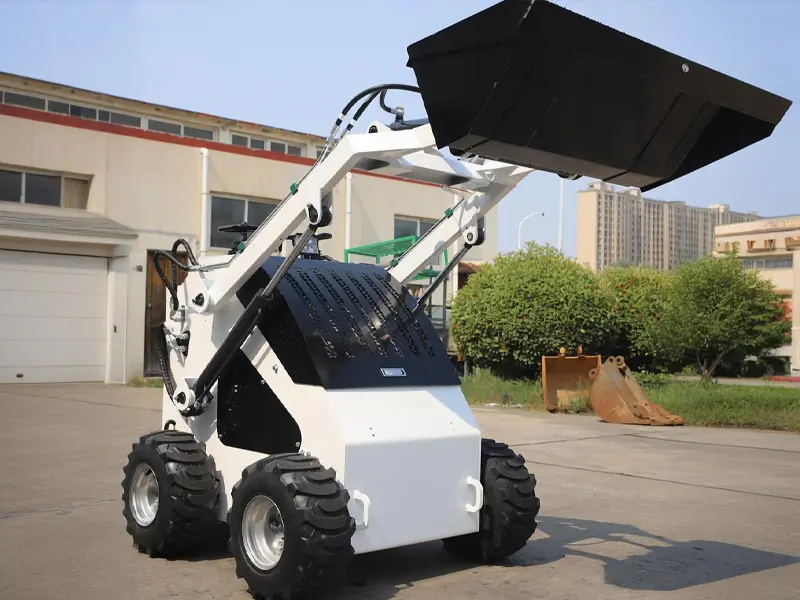
2. Skid Steer Loader
A skid steer loader is compact and highly maneuverable. It is ideal for small job sites, landscaping, and urban construction where space is limited.
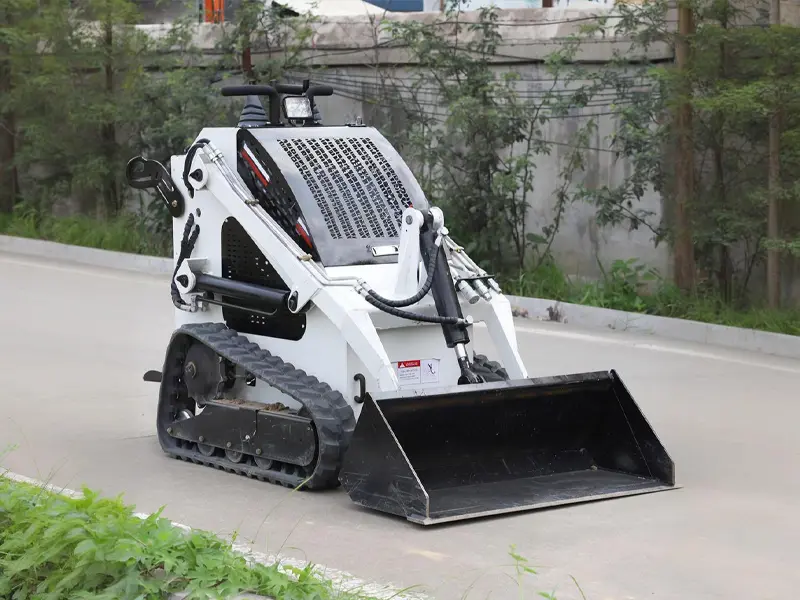
3. Track Loader
Also known as a crawler loader, this type runs on tracks instead of wheels. It offers better traction and stability on soft, muddy, or uneven terrain.
Key Technical Specifications
When evaluating a loader, several technical parameters are important:
- Bucket Capacity – The volume of material the bucket can carry (usually measured in cubic meters or cubic yards).
- Rated Load – The maximum weight the loader can safely lift and transport.
- Operating Weight – The total weight of the machine, which affects stability and performance.
- Engine Power & Torque – Determines digging force and material handling capability.
- Torque Converter Transmission – Allows smooth power transfer from the engine to the drivetrain, improving efficiency and reducing mechanical stress during heavy-duty operations.
These specifications directly impact performance, fuel efficiency, and job site suitability.
Backhoe vs Loader
| Feature | Backhoe Loader | Wheel Loader |
|---|---|---|
| Primary Function | Digging + Loading | Loading Only |
| Structure | Front bucket + rear arm | Front bucket only |
| Mobility | Compact | Larger |
| Application | Urban, utilities | Mining, large construction |
| Cost | Moderate | Higher |
When Should You Choose a Backhoe Loader?
A backhoe loader is ideal when:
- You need both digging and loading functions
- Project space is limited
- Budget constraints require one machine instead of two
- You work on municipal or utility projects
- Transportation flexibility is important
For small to medium contractors, a backhoe loader for sale is often the best entry-level investment in construction equipment fleets
When Is a Wheel Loader the Better Choice?
A wheel loader is the better choice when your project involves high-volume material movement, especially in mining or quarry environments where durability and power are essential. It is particularly suitable when the primary task is loading trucks quickly and efficiently, and when heavy-duty bucket capacity is required. If maximizing productivity per hour and increasing material throughput are your top priorities, a heavy-duty wheel loader provides the speed, strength, and operational efficiency needed to handle demanding workloads.
Technical Comparison for Professional Buyers
For fleet managers and equipment procurement professionals, technical specifications play a decisive role in equipment selection.
🔹 Backhoe Loader (Typical Range)
Core Advantage: Multi-function capability (digging + loading in one machine)
Engine Power: 75–110 HP
Bucket Capacity: 0.8–1.2 m³
Digging Depth: 4–6 meters
Operating Weight: 7–9 tons
🔹 Wheel Loader (Typical Range)
Core Advantage: Superior loading speed and material throughput
Engine Power: 120–300+ HP
Bucket Capacity: 1.5–5 m³
Operating Weight: 10–30+ tons
Breakout Force: High breakout force for heavy-duty material handling
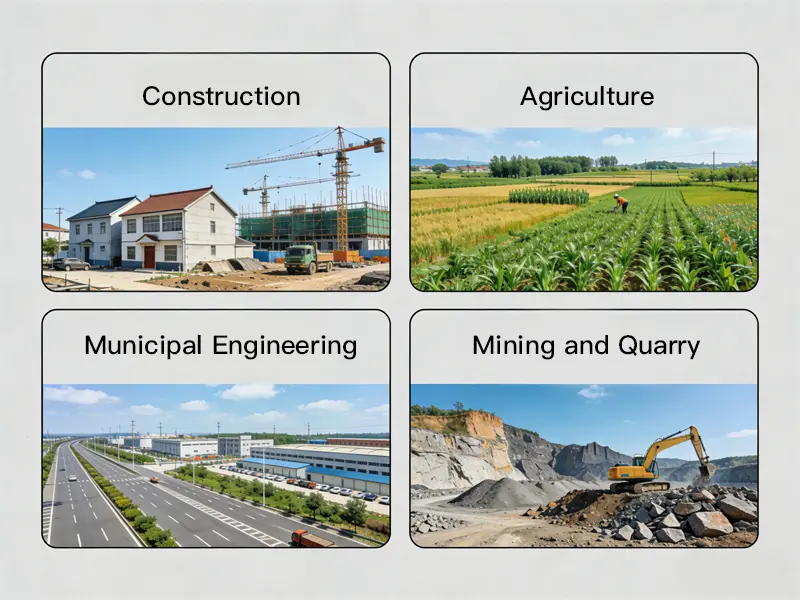
Industry Applications
- Construction: Backhoe loaders are widely used for foundation digging and utility installation, while wheel loaders handle bulk material movement.
- Agriculture: Backhoe loaders are suitable for trenching and farm maintenance, whereas loaders move feed, soil, and fertilizer efficiently.
- Municipal Engineering: Backhoe loaders excel in road repair and drainage work.
- Mining and Quarry: Wheel loaders are the preferred solution due to higher payload capacity.
Cost Considerations: Which Is More Economical?
If you compare initial purchase costs:
- Backhoe loaders generally require lower investment.
- Wheel loaders may deliver higher productivity but involve higher acquisition and operating costs.
For contractors who need flexibility and lower capital investment, a backhoe loader often provides better ROI.
For large-scale operations where productivity outweighs versatility, the wheel loader justifies its cost.
FAQs
conclusion
The difference between a backhoe and a loader ultimately comes down to versatility versus productivity.
Choose a backhoe loader if you need digging and loading in one compact machine.
Choose a wheel loader if your primary task is high-efficiency material handling.
As a professional construction machinery manufacturer and supplier, we provide reliable backhoe loaders and wheel loaders tailored to different project requirements. Our machines are designed for durability, performance, and long-term operational efficiency.
If you are looking for factory-direct pricing or customized solutions, feel free to contact us for professional consultation.