15 Most Common Mini Excavator Uses
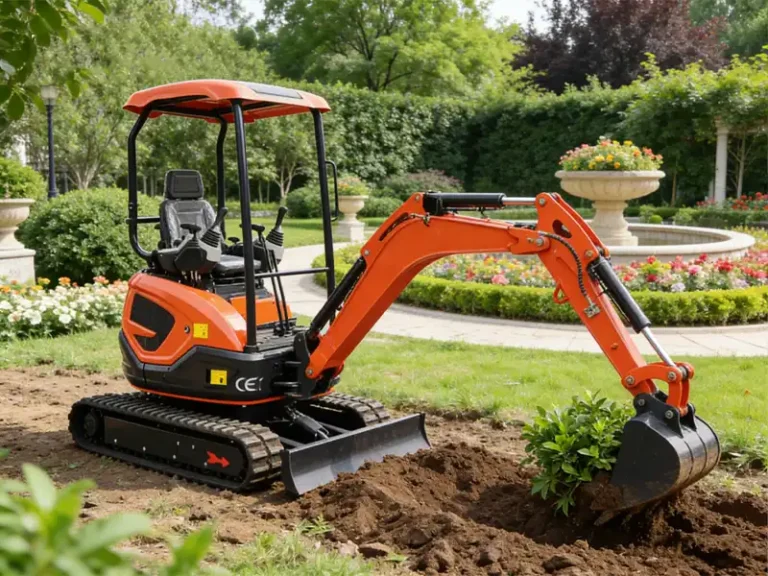
If you think a mini excavator is just for digging small holes, think again. These compact powerhouses—often called compact excavators—have become the go-to machine for contractors, farmers, and landscapers alike. Their balance of power and maneuverability allows them to perform tasks that standard-sized machines simply can’t handle.
In this guide, we’ll break down exactly what a mini excavator is used for and why it might be the most profitable investment for your fleet.
Table of Contents
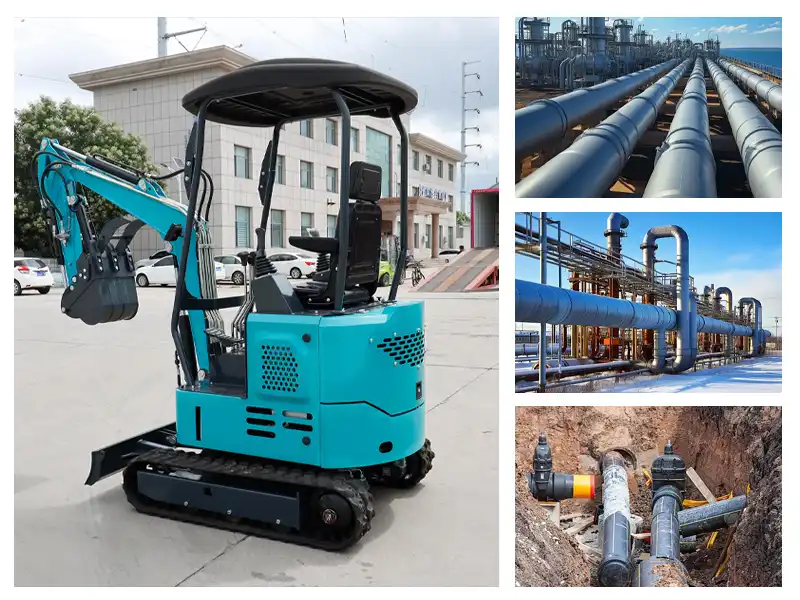
Precision Trenching for Utilities
One of the primary ueses of a mini excavator is digging narrow trenches for underground utilities. Because of their slim profile, they can easily navigate between existing structures to lay down:
- Water and sewer lines
- Electrical conduits
- Gas piping
- Fiber optic cables
Unlike a backhoe, a mini excavator with a 360-degree swing allows operators to dump soil exactly where they need it, even in cramped alleys.
Mini excavator applications for landscaping
Landscapers love mini excavators for their “light footprint.” They provide enough power to reshape a backyard without destroying the existing turf.
- Digging Swimming Pools & Ponds: Precision digging ensures the shape is perfect before the liner goes in.
- Stump Removal: Using a ripper or a wood cracker attachment, a 3-ton machine can pop out old tree stumps in minutes.
- Terracing & Retaining Walls: Preparing the base for heavy stone walls requires level excavation—a specialty of the compact excavator.
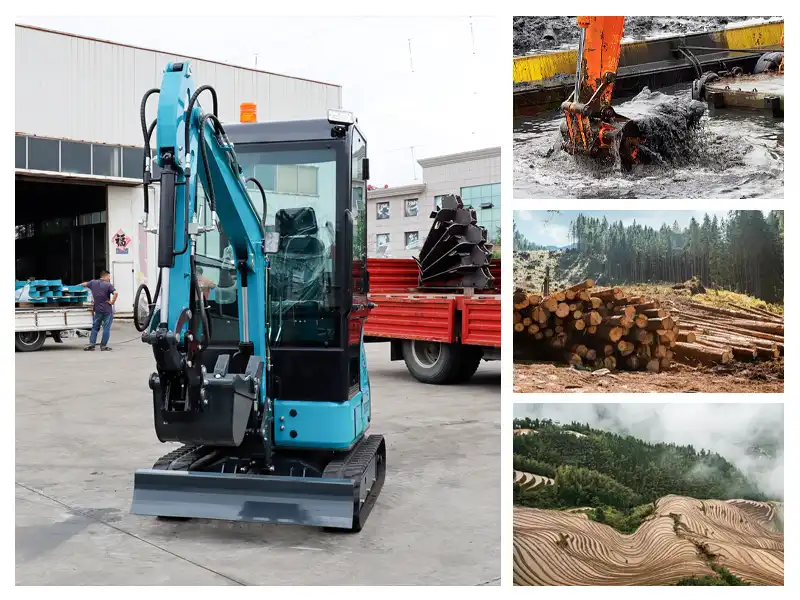
Indoor Demolition & Renovation
Standard excavators can’t fit through a double door, but many mini excavators can. By using an electric-powered model or one with low-emission engines, contractors use them for:
- Breaking up concrete floors with a hydraulic hammer.
- Tearing down internal walls.
- Clearing debris from multi-story demolition sites (they are light enough to be lifted by cranes).
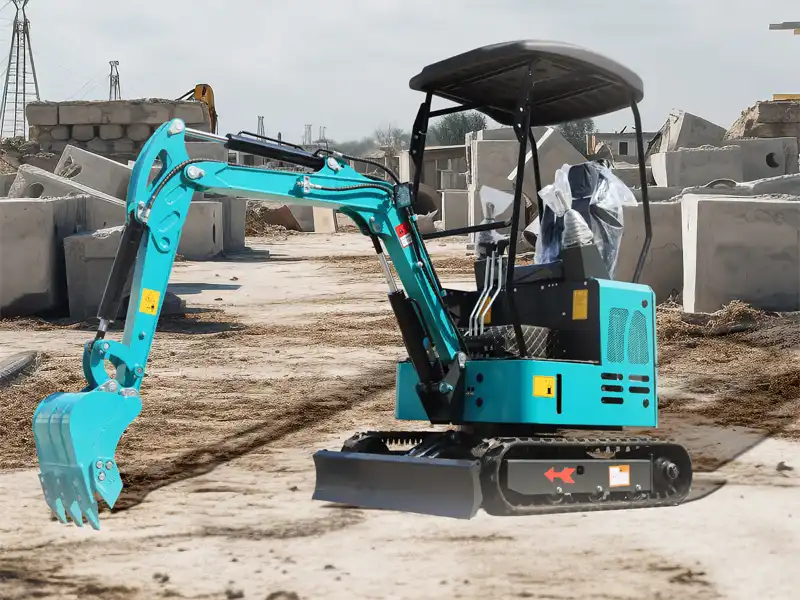
Agricultural & Farm Management
For farmers, a mini excavator is like a swiss army knife. It’s small enough to navigate through barn doors and powerful enough for heavy lifting.
- Fencing: With an auger attachment, you can drill hundreds of fence post holes in a single day.
- Drainage Ditch Clearing: Keeping irrigation channels clear of silt and overgrowth is essential for crop health.
- Animal Waste Handling: Using a grapple, moving hay bales, or clearing manure becomes a one-man job.
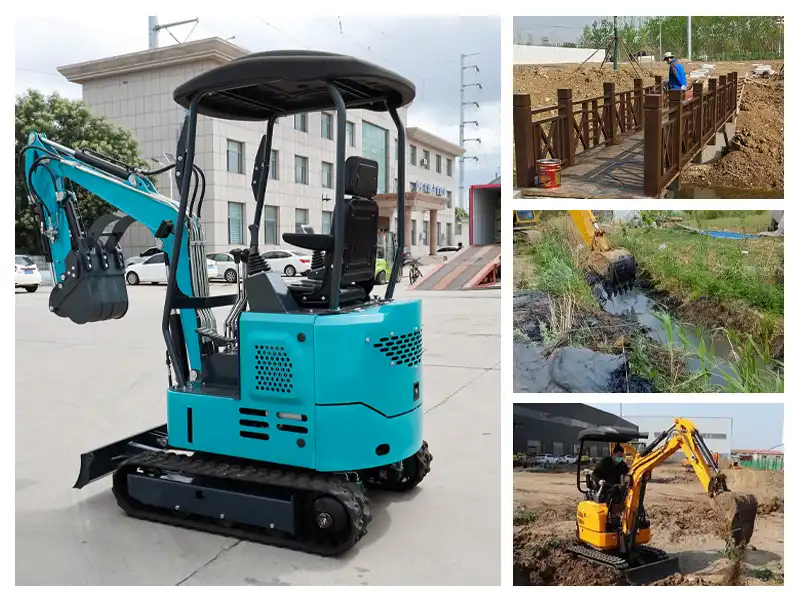
The Secret Sauce: Mini Excavator Attachments
The true versatility of the machine lies in its attachments. To maximize your mini excavator applications, consider these tools:
- Augers: For holes and footings.
- Hydraulic Breakers: For concrete and rock.
- Grapples: For picking up logs, rocks, and scrap.
- Grading Buckets: For finishing and leveling soil.
Comparison: Mini vs. Large Excavator
| Feature | Mini Excavator (1-6 Tons) | Standard Excavator (>10 Tons) |
|---|---|---|
| Best For | Tight spaces, residential, light utility | Heavy mining, mass excavation |
| Surface Impact | Minimal (Rubber tracks available) | High (Heavy steel tracks) |
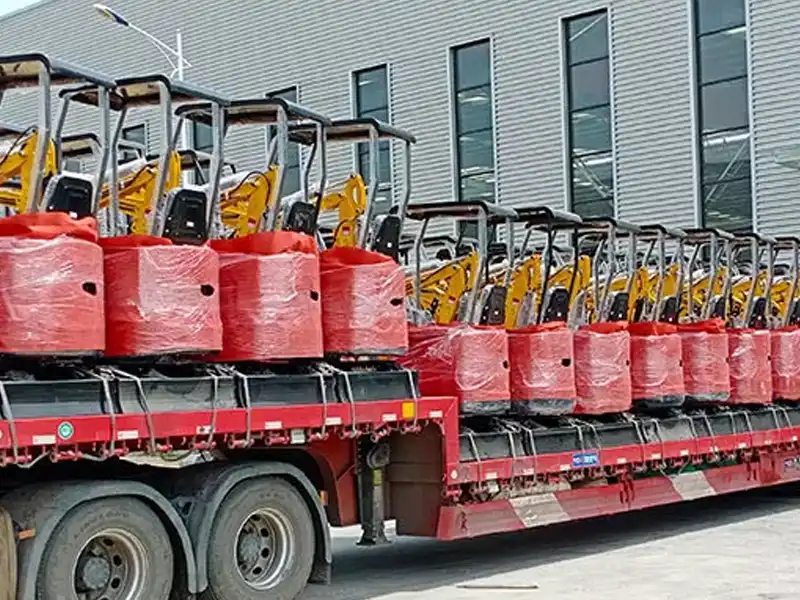
| Transport | Easy (Pick-up truck & trailer) | Difficult (Requires oversized permits) |

FAQs
conclusion
In the world of modern construction and landscaping, the mini excavator has proven that bigger isn’t always better. Its ability to perform precision trenching, handle indoor demolition, and manage complex agricultural tasks makes it a “force multiplier” for any crew.
The real secret to its success is versatility. By combining a compact frame with a wide array of specialized attachments, you aren’t just buying a digging machine—you are investing in a multi-purpose platform that reduces manual labor and slashes transportation costs.
Whether you are a residential contractor or a large-scale equipment distributor, understanding these mini excavator uses is key to staying competitive in a market that increasingly demands precision, speed, and efficiency.
Ready to find the perfect match for your next project? Explore our [Mini Excavator Series] or request a [Free Attachment Compatibility Chart] to see how we can help you get the job done faster.