Introduction
At many construction sites, particularly in municipal projects and small-scale engineering, several common challenges often arise: limited workspace, inability to close roads for extended periods, constrained budgets, and low equipment utilization rates. A dedicated excavator can only handle digging, while a loader is limited to loading and transporting materials. Deploying multiple machines not only occupies space but also increases scheduling complexity and costs. It is precisely this practical demand that gave rise to the backhoe loader.
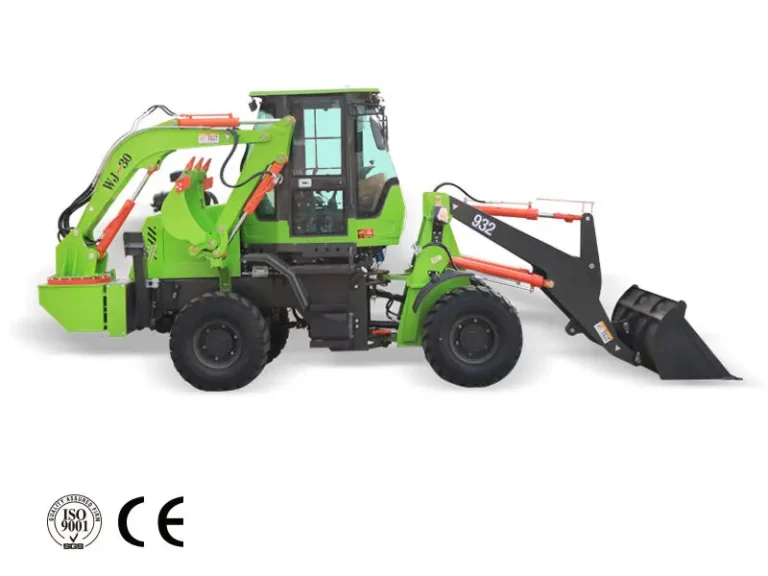
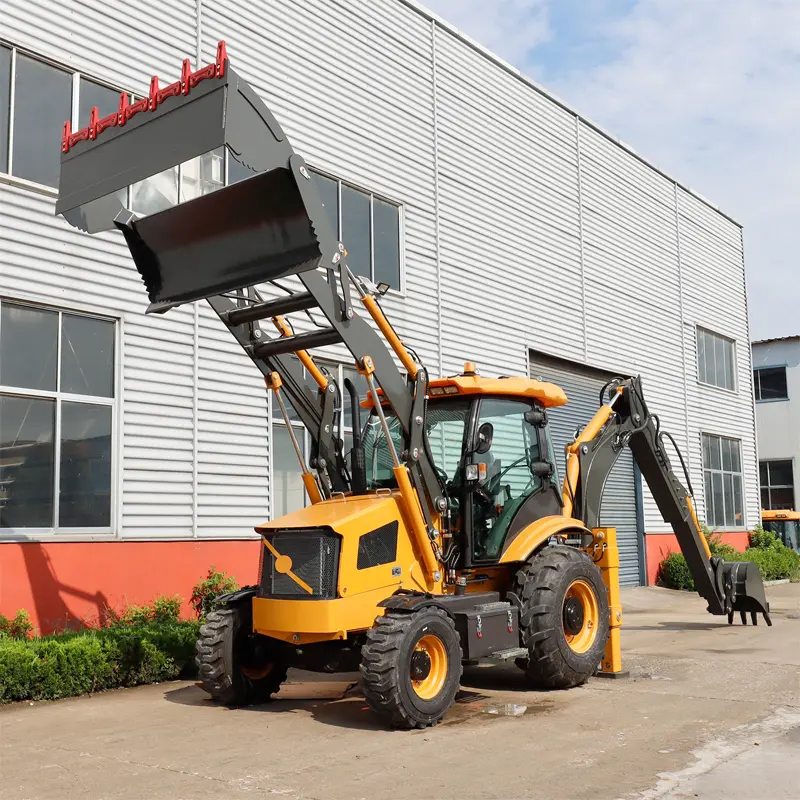
Through integrated design, the backhoe loader combines front-end loading capabilities with rear-end excavation functions on a single chassis, achieving “dual functionality in one machine.” Operators need not switch equipment; simply changing their operating position or control system allows them to complete multiple tasks like excavation, loading, backfilling, and material transfer. This structural composite design enables it to accomplish work within confined spaces that would otherwise require multiple machines working in coordination.
How Does a Backhoe Loader Work? how does a single machine simultaneously excavate and load? How does it achieve functional switching through its structure and hydraulic systems? Next, we’ll delve into the structural composition and working principles of the backhoe loader to analyze the core mechanism behind its “one machine, multiple functions.”
Table of Contents
What Is a Backhoe Loader?
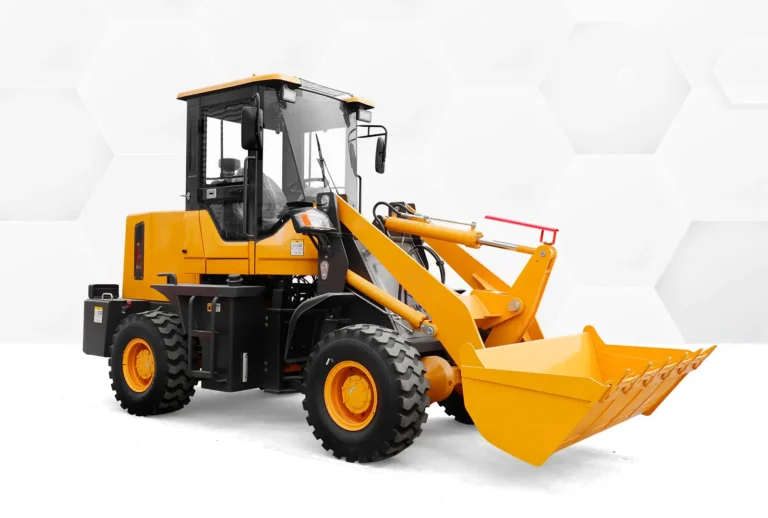
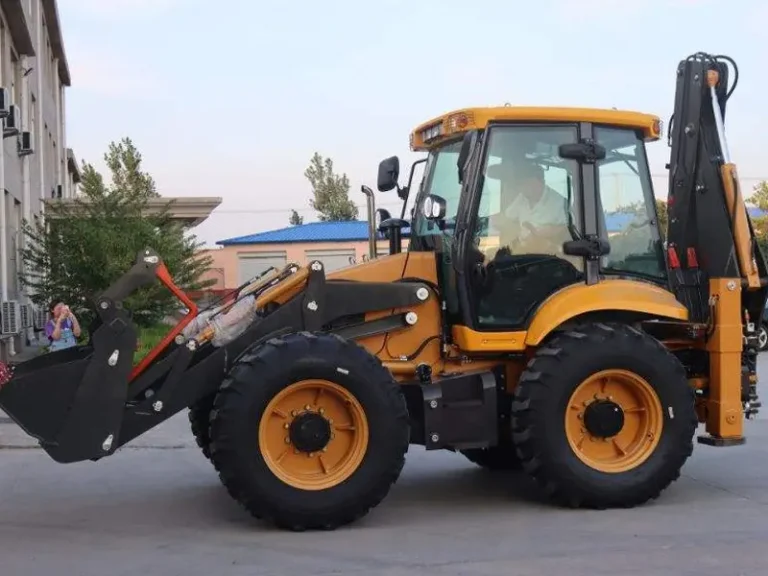
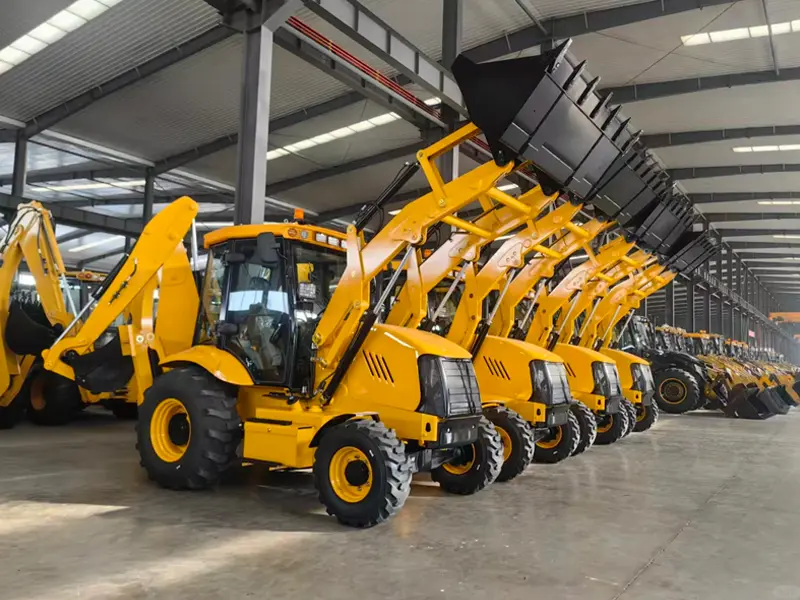
A backhoe loader is a multifunctional construction machine combining:
- A front loader bucket for loading and material handling
- A rear backhoe attachment for excavation work
- A central tractor-style chassis for mobility and stability
Unlike dedicated excavators or loaders, a backhoe loader allows operators to switch tasks quickly without changing equipment, making it ideal for small and medium-sized job sites.
Working Principle Backhoe Loader
The operation of a backhoe loader is mainly based on hydraulic power transmission combined with mechanical leverage systems. The machine converts engine power into hydraulic energy, which drives different working components.
To better understand its performance, the working principle can be divided into four key systems.
1. Power Transmission Principle
The engine acts as the primary power source. This design allows continuous power delivery while maintaining fuel efficiency and operational stability.
- The diesel engine generates mechanical energy.
- Hydraulic pumps convert this energy into pressurized hydraulic oil.
- Power is distributed to digging, lifting, steering, and driving systems.
Why it matters for buyers:
Efficient power transmission directly affects fuel consumption, operating smoothness, and machine lifespan.
Division of Components
| Component | Function |
|---|---|
| Engine | Converts fuel into mechanical energy to drive the hydraulic pump and the travel system. |
| Hydraulic System | Converts mechanical energy into hydraulic energy to drive all actuators. |
| Front Loading Arm | Performs scooping and handling of bulk materials, as well as ground leveling. |
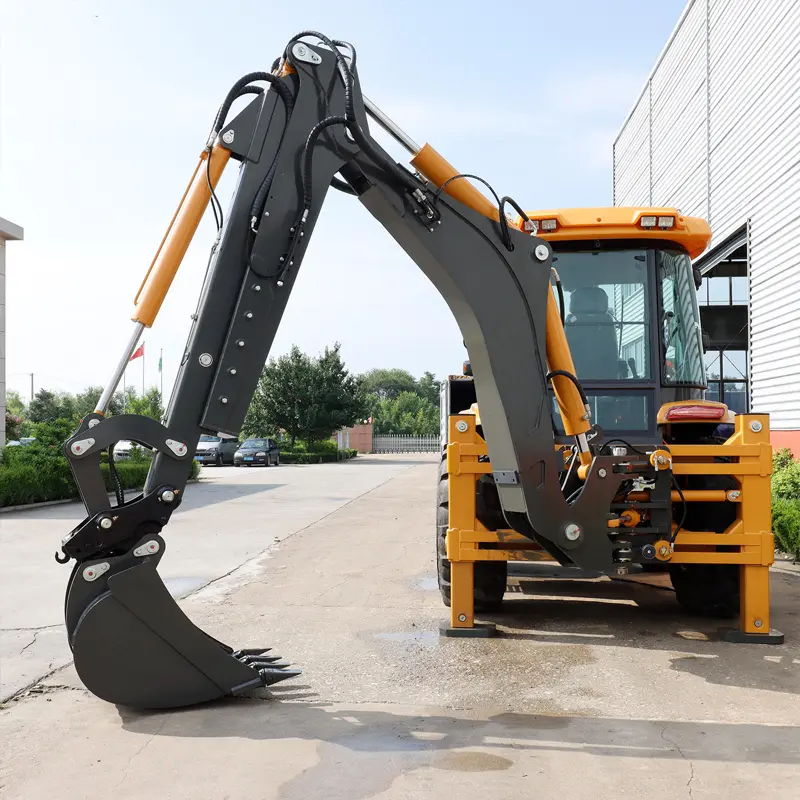
| Rear Backhoe Arm | Performs precise excavation, suitable for trenching and pit excavation. |
| Stabilizer Outriggers | Secures the vehicle body during excavation operations to prevent tipping over. |
| Operator Cabin | Serves as the control center; the seat can rotate 180° for operation facing forward or backward. |
2. Hydraulic System Working Principle
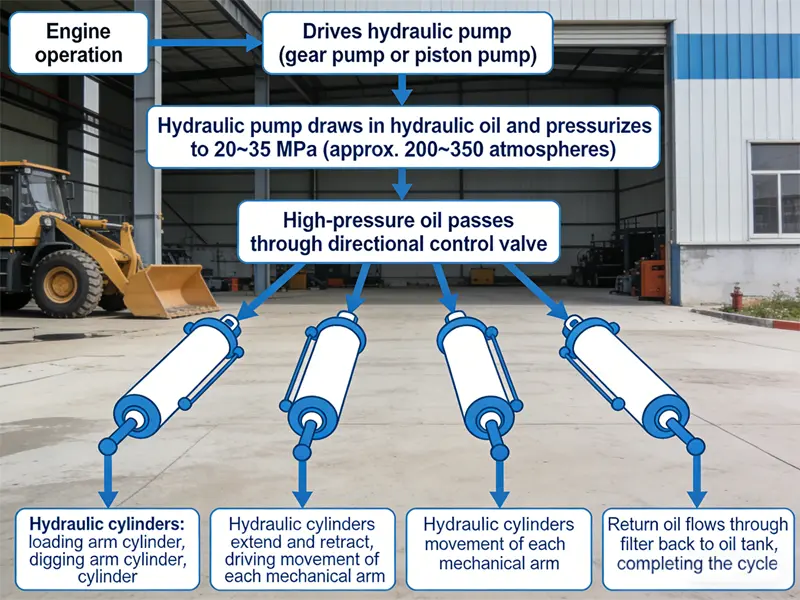
The hydraulic system is the heart of a backhoe loader. Pressurized hydraulic fluid moves through control valves and pushes cylinders to create motion such as lifting, digging, tilting, and swinging. Hydraulics allow operators to perform precise movements even in confined construction environments.
Key components include:
- Hydraulic pumps
- Control valves
- Hydraulic cylinders
- Oil circuits
Hydraulic System Workflow:
Buyer value:
A high-quality hydraulic system means smoother control, higher digging force, and lower maintenance costs.
3. Backhoe Excavation Mechanism/Loader Mechanism Principle
1. Front Loading System: Why Doesn’t Material Spill When the Bucket Rises?
Front loading may seem simple, but it hides an ingenious geometric design—the parallelogram linkage mechanism.
Conventional linkage vs. parallelogram linkage
If the loading arm were simply a single hydraulic cylinder directly connected to the bucket, raising the bucket would cause it to tilt forward, spilling the load.
The parallelogram linkage mechanism solves this by:

Front-End Loader Work Cycle
- Scoop: Lower the bucket to the ground and advance it into the material pile
- Scoop Up: Hydraulic cylinders activate, tilting the bucket upward to scoop up material
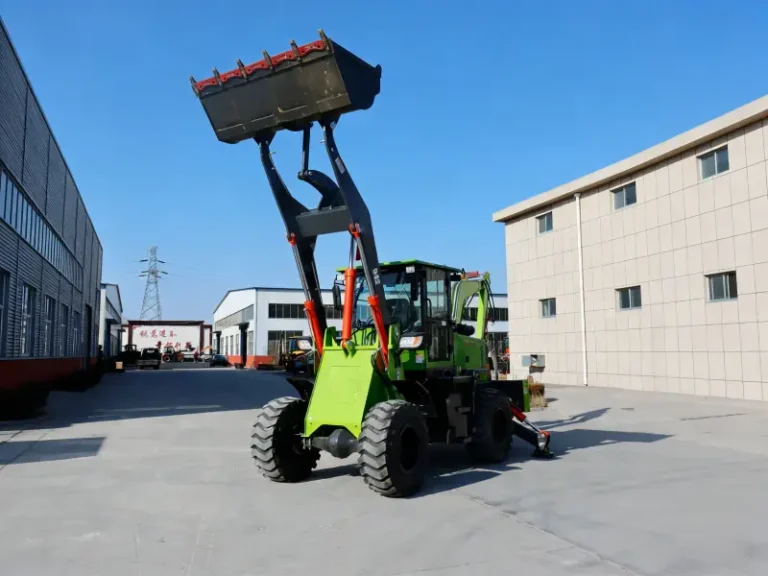
- Lift: The loading arm’s hydraulic cylinders extend, raising the bucket to the unloading height
- Unload: The bucket tilts, dumping material into the truck bed or designated location
- Reset: The loading arm and bucket return to their initial position, ready for the next cycle
2. Rear Backhoe System: Three-Section Design Mimicking the Human Arm
The rear backhoe excavation system represents the technological essence of the excavator loader.
Three-Section Arm Structure
The backhoe arm consists of three articulated sections, perfectly mimicking the human arm.
| Mechanical Components | Corresponding Human Body Parts | Control Hydraulic Cylinders |
|---|---|---|
| Boom | Upper Arm | Boom Hydraulic Cylinder (1-2 units) |
| Dipper/Arm | Forearm | Dipper Hydraulic Cylinder |
| Bucket | Palm/Fingers | Bucket Hydraulic Cylinder |
Stabilizer Legs: Rooting Down Before Digging
Rear excavation operations generate immense lateral forces. Without securing the machine body, it may tip over or slide.
Before the operation, the operator first lowers the stabilizer legs on both sides, pressing the leg pads firmly into the ground. Hydraulic cylinders drive the legs, slightly lifting the body off the ground and raising the rear wheels. The entire machine is then securely anchored to the ground by its four legs.
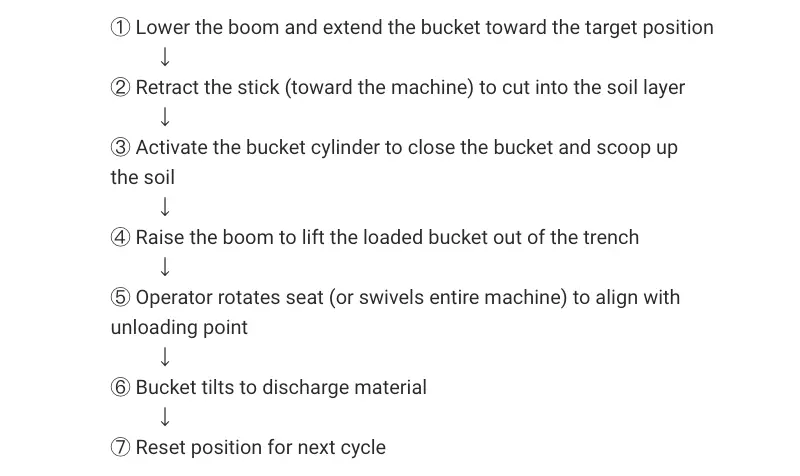
A complete mining cycle:
4. Travel System
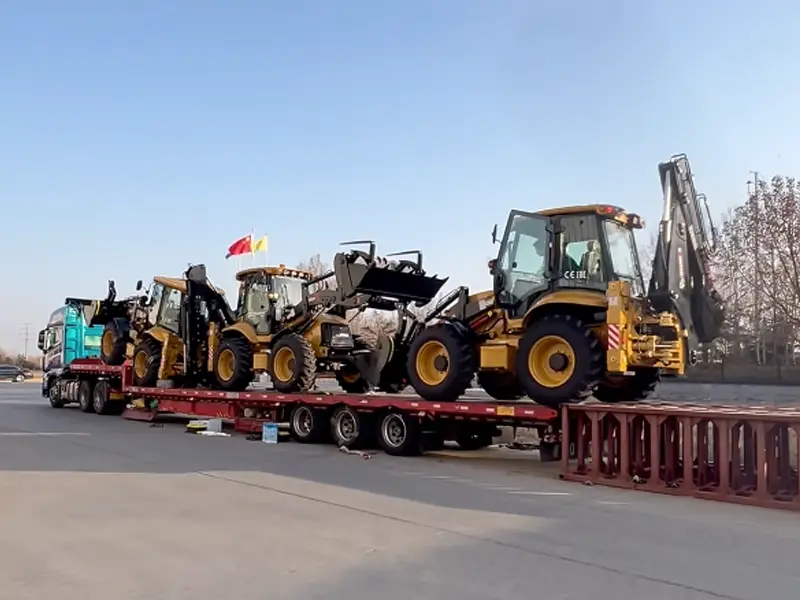
Unlike large excavators that require flatbed transport, backhoe loaders are equipped with a four-wheel-drive rubber-tired travel system, enabling them to travel directly on roads and move between job sites independently.
Key Features of the Travel System:
Four-wheel drive system: Both front and rear axles are driven, maintaining excellent traction on muddy or soft ground.
Differential lock: Engages to lock the differential when necessary, preventing wheel slip.
Highway travel speed: Typically reaches 30–40 km/h, enabling short-distance transfers on public roads.
Pneumatic tires: Compared to tracks, they do not damage asphalt surfaces during operation, making them suitable for municipal work.
Typical Working Process on a Job Site
A backhoe loader usually operates in the following sequence:
- Travel to the work location
- Deploy stabilizer legs for balance
- Perform rear excavation work
- Rotate or reposition the machine
- Switch to front loader mode
- Load and transport materials
This seamless workflow explains why contractors often replace multiple machines with one backhoe loader.
Why Understanding the Working Principle Matters When Buying
Many purchasing mistakes happen because buyers focus only on price or engine power.
Understanding how the machine works helps you:
- Evaluate real digging performance
- Choose suitable hydraulic configurations
- Predict maintenance requirements
- Improve long-term ROI
- Avoid underpowered or oversized equipment
In short, the working principle directly impacts operating cost and project efficiency.
Common Applications of Backhoe Loaders
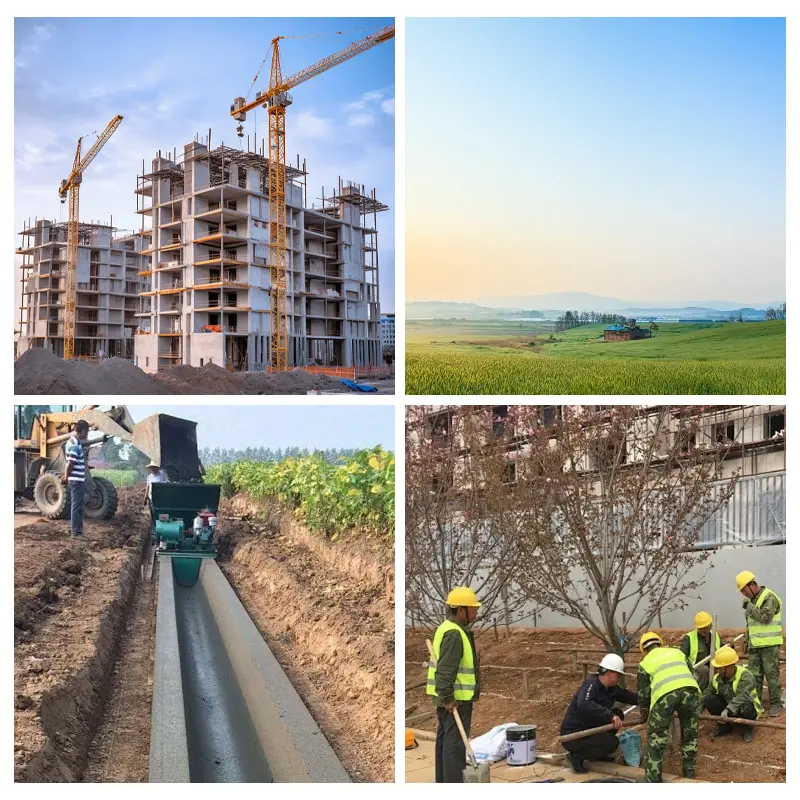
Backhoe loaders are widely used across industries:
- Municipal construction projects
- Road maintenance and repair
- Agricultural land preparation
- Utility and pipeline installation
- Landscaping and small mining operations
Their mobility and multifunction capability make them especially valuable for contractors managing diverse tasks.
Comparison with Pure Excavators and Pure Loaders
A backhoe loader is not a jack-of-all-trades; understanding its limitations is equally important.
| Comparison Dimension | Backhoe Loader | Wheel Loader | Pure Hydraulic Excavator |
|---|---|---|---|
| Loading Capacity | Medium (0.5–1.0 m³ bucket) | Strong (1.5–5.0 m³) | Weak |
| Excavation Capacity | Medium (dig depth 3–6 m) | None | Strong (dig depth over 10 m) |
| Excavation Precision | Relatively high | — | Extremely high |
| Site Transfer Convenience | Excellent (self-driving) | Good | Poor (needs flatbed truck) |
| Applicable Scale | Small and medium-sized projects | Large earthwork projects | Large-scale precision excavation |
| Purchase Cost | Low | Medium | Medium to high |
| Typical Applications | Municipal pipe network, rural construction | Mines, ports | High-rise building foundation pits |
Key Design Factors That Affect Performance
Not all backhoe loaders perform the same, even with similar specifications.Important factors include:
- Hydraulic system quality
- Structural steel strength
- Weight distribution and counterbalance
- Attachment compatibility
- Operator cabin ergonomics
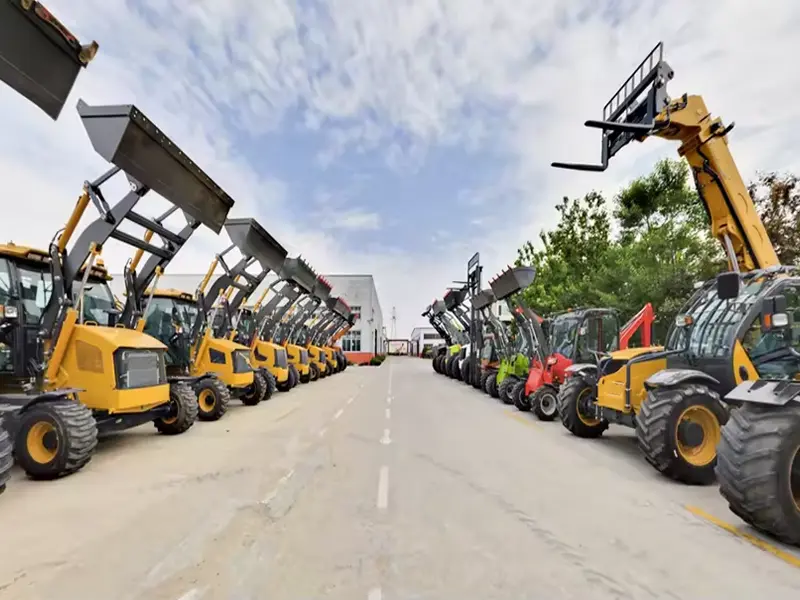
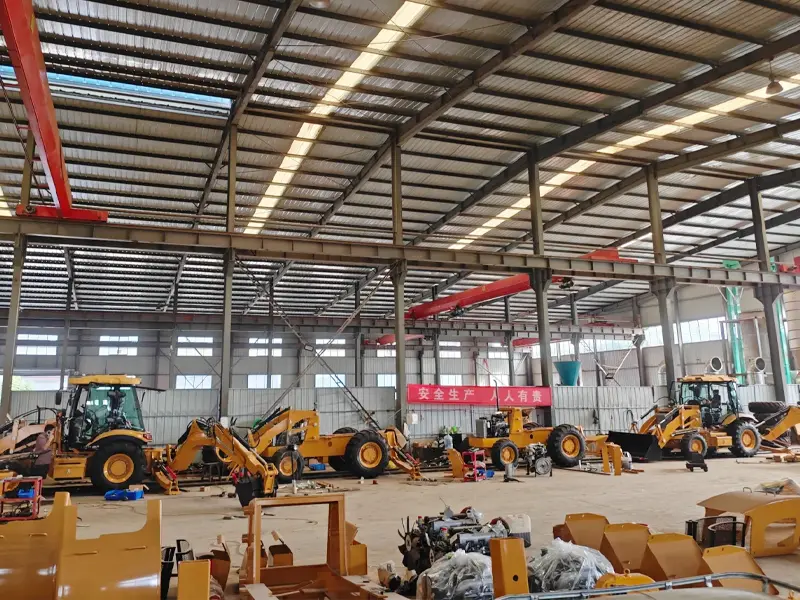
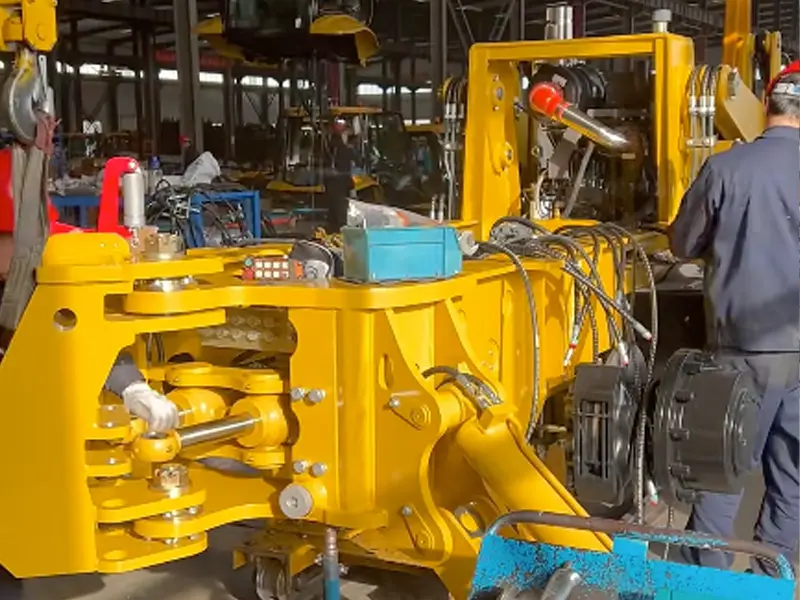
Professional manufacturers focus on durability testing and engineering optimization to ensure reliability in harsh working environments.

FAQs
conclusion
The working principle of a backhoe loader explains why it remains one of the most cost-effective machines in construction. By combining hydraulic power, intelligent structural design, and multifunction capability, it delivers high productivity across various job sites.
If you are selecting equipment for upcoming projects, understanding how the machine works is the first step toward making a smarter investment.
Contact our engineering team today to receive model recommendations, customization options, and competitive factory-direct solutions tailored to your project needs.